Understanding Soil Degradation: A Silent Threat to Our Future
Understanding Soil Degradation: A Silent Threat to Our Future
Soil is one of the most valuable natural resources on Earth. It supports agriculture, maintains ecosystems, and plays a vital role in sustaining human life. However, soil degradation has become a major global challenge that threatens food security and environmental stability. When soil is mismanaged or overused, it gradually loses its fertility and productivity, making it difficult to grow crops and maintain healthy ecosystems.
Soil degradation often occurs silently over time. Many farmers may not immediately notice the changes until crop yields decline or the land becomes less productive. Understanding the causes and consequences of soil degradation is essential for protecting this important resource.
What Is Soil Degradation?
Soil degradation refers to the decline in the quality and health of soil due to natural or human-induced factors. It affects the soil’s physical structure, chemical composition, and biological activity. As soil quality declines, its ability to support plant growth, store nutrients, and retain water is significantly reduced.
Healthy soil contains organic matter, beneficial microorganisms, nutrients, and a stable structure that allows air and water to circulate properly. When soil becomes degraded, these properties deteriorate, leading to poor crop growth and increased vulnerability to erosion.
Major Causes of Soil Degradation
Most soil degradation is caused by human activities rather than natural processes. Several farming and land-use practices contribute to this problem.
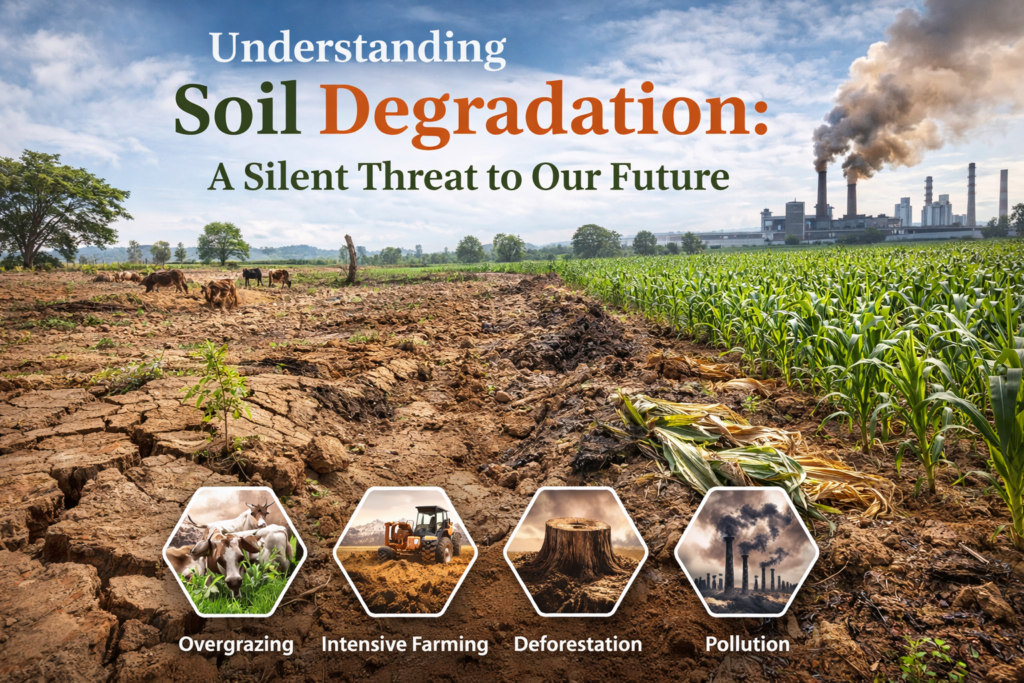
One of the primary causes is unsustainable agricultural practices, such as continuous monocropping and excessive use of chemical fertilizers and pesticides. These practices reduce soil fertility over time and disturb the natural balance of soil organisms.
Deforestation is another significant factor. When forests are cleared for agriculture or development, the protective vegetation cover disappears. Without this protection, soil becomes exposed to wind and water erosion.
Overgrazing by livestock can also damage soil. When animals graze excessively in one area, vegetation is removed faster than it can regenerate, leaving the soil bare and vulnerable.
Urban expansion and industrial activities further contribute to soil degradation by contaminating soil with pollutants or covering fertile land with buildings and infrastructure.
Types of Soil Degradation
Soil degradation can occur through different processes that affect soil health in various ways.
Physical degradation includes soil erosion caused by wind or water, soil compaction from heavy machinery, and the formation of surface crusts that limit water infiltration.
Chemical degradation involves nutrient depletion, salinization, soil acidification, and contamination by harmful substances.
Biological degradation occurs when soil loses organic matter and beneficial microorganisms. This reduces soil biodiversity and weakens the natural processes that maintain soil fertility.
Effects on Agriculture and the Environment
The consequences of soil degradation are serious and far-reaching. One of the most immediate impacts is declining crop productivity. Farmers may notice reduced yields and poorer crop quality as the soil becomes less fertile.
As soil fertility decreases, farmers often rely more heavily on fertilizers and irrigation to maintain production. This increases production costs and can further strain natural resources.
Soil degradation also reduces the land’s ability to withstand climate extremes such as droughts and floods. Healthy soil acts like a sponge, storing water and nutrients, but degraded soil loses this capacity.
From an environmental perspective, degraded soils store less carbon, which contributes to increased greenhouse gas emissions and climate change. In addition, soil degradation disrupts ecosystems and reduces biodiversity.
Solutions to Protect Soil Health
Although soil degradation is a serious issue, it can be addressed through sustainable land management practices. Farmers can improve soil health by adopting conservation agriculture techniques such as crop rotation, reduced tillage, and the use of cover crops.
Adding organic matter to soil through compost, manure, and crop residues helps restore soil fertility and improve its structure. Agroforestry practices, where trees are integrated with crops, can also protect soil from erosion and enhance biodiversity.
Proper grazing management is important to prevent overgrazing and allow vegetation to recover. Modern technologies, including soil monitoring tools and digital farming platforms, can help farmers manage soil resources more efficiently.
Conclusion
Soil degradation is a growing global concern that threatens food production, environmental health, and rural livelihoods. Protecting soil requires responsible land management, sustainable farming practices, and greater awareness among farmers and policymakers.
By conserving soil today, we ensure that future generations will have productive land, stable ecosystems, and secure food supplies.