
Lettuce: From Common Weed to Salad Star
Lettuce: From Common Weed to Salad Star
Lettuce (Lactuca sativa) is one of the most widely consumed leafy vegetables in the world today. It is a key ingredient in salads, sandwiches, and healthy diets. However, the journey of lettuce from a simple wild weed to a globally cultivated vegetable is fascinating. Over centuries, farmers and plant breeders have transformed this once-wild plant into many cultivated varieties that are now an essential part of modern agriculture and cuisine.
Origin and History of Lettuce
The origins of lettuce trace back thousands of years to ancient civilizations. Historians believe that the earliest forms of lettuce were wild plants that grew in regions around the Mediterranean. These plants were initially valued for their seeds, which were pressed to produce oil.
Ancient Egyptians were among the first to domesticate lettuce. Over time, they selected plants with larger leaves and milder flavors, gradually turning lettuce into a leafy vegetable rather than an oilseed crop. From Egypt, lettuce cultivation spread to Greece and Rome, where it became a common crop in kitchen gardens.
As trade routes expanded, lettuce was introduced to other parts of Europe and eventually to Asia and the Americas. Today, lettuce is grown worldwide and has become a staple vegetable in both home gardens and commercial farms.
Types of Lettuce
There are several types of lettuce grown around the world, each with unique characteristics, textures, and flavors.
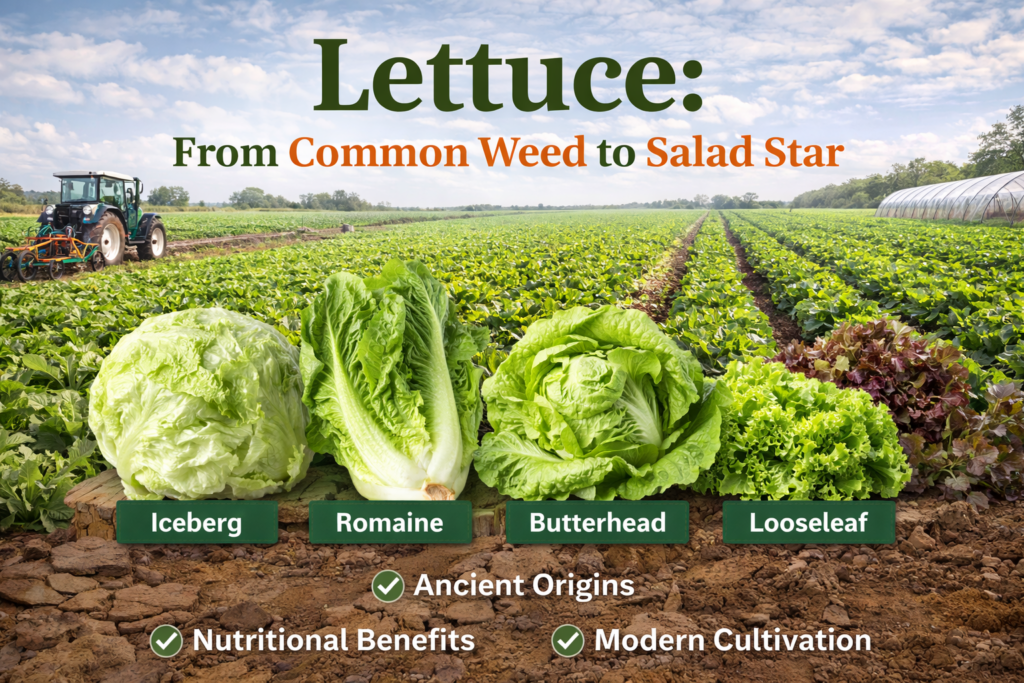
Crisphead lettuce, commonly known as iceberg lettuce, forms tight, crunchy heads and is widely used in salads and burgers.
Romaine lettuce, also called cos lettuce, has long, upright leaves with a firm texture and slightly stronger flavor. It is a popular ingredient in Caesar salads.
Butterhead lettuce has soft, tender leaves and a mild taste. Varieties such as Boston and Bibb lettuce fall under this category.
Looseleaf lettuce grows in loose bunches rather than forming heads. These varieties come in different colors, including green and red, and are commonly used in fresh salads.
The diversity of lettuce varieties allows farmers and consumers to choose types that suit different climates, growing conditions, and market preferences.
Ideal Climate and Growing Conditions
Lettuce is considered a cool-season crop, which means it grows best in moderate temperatures. The ideal temperature range for lettuce cultivation is between 7°C and 24°C. Higher temperatures can cause plants to bolt early, producing flowers and seeds instead of tender leaves.
The crop prefers well-drained, fertile soil rich in organic matter. Adequate moisture is essential for healthy leaf development, but excessive watering or poor drainage can lead to root diseases.
Farmers in warm regions often grow lettuce during the cooler months such as winter or early spring. In commercial farming, greenhouse and polyhouse systems are also used to maintain ideal growing conditions and extend the production season.
Nutritional Value of Lettuce
Although lettuce is often considered a light salad vegetable, it provides several important nutrients. It contains dietary fiber, vitamins, minerals, and antioxidants that contribute to overall health.
Dark green varieties such as romaine lettuce generally contain higher amounts of vitamin A, vitamin K, and folate compared to pale varieties like iceberg lettuce. Lettuce also has a high water content, which helps keep the body hydrated and supports healthy digestion.
Because lettuce is low in calories, it is commonly included in weight-management diets and healthy eating plans.
Additional Uses and Traditional Beliefs
Lettuce contains a milky substance known as latex in its stems and leaves. Historically, extracts from lettuce and related species have been used in traditional medicine as mild sedatives or sleep aids. These extracts contain compounds called sesquiterpene lactones, which may have calming effects.
In ancient Egypt, lettuce was associated with fertility and was sometimes linked to religious symbolism. Although many traditional beliefs about lettuce are not scientifically proven, they highlight the cultural importance of this plant in early agricultural societies.
Modern Lettuce Farming
Today, lettuce is cultivated on a large scale in many countries to supply fresh markets, supermarkets, and ready-to-eat salad products. Farmers use improved varieties, efficient irrigation systems, and protected cultivation techniques to maintain consistent quality and production.
Modern agriculture also uses precision farming technologies, soil monitoring, and climate-controlled systems to optimize lettuce growth while reducing pesticide use and conserving water.
With increasing demand for fresh and healthy vegetables, lettuce continues to play an important role in global agriculture and nutrition.
Conclusion
Lettuce has come a long way from its origins as a wild weed. Through centuries of cultivation and improvement, it has become one of the most popular leafy vegetables worldwide. Its versatility, nutritional benefits, and adaptability to different growing systems make it a valuable crop for both farmers and consumers.
As interest in healthy eating and sustainable agriculture continues to grow, lettuce will remain a key component of modern diets and vegetable farming systems.