Loss of Arable Land: A Growing Threat to Global Food Security
Loss of Arable Land: A Growing Threat to Global Food Security
The world is facing a serious challenge as the amount of productive farmland continues to decline while the global demand for food keeps increasing. Arable land—land suitable for growing crops—is one of the most valuable resources for agriculture. However, rapid urbanization, environmental degradation, and unsustainable farming practices are reducing the availability of fertile land across the globe.
This growing imbalance between shrinking farmland and rising food demand poses a major threat to global food security. Protecting and managing arable land sustainably is now more important than ever.
What Is Arable Land?
Arable land refers to land that can be used for cultivating crops such as wheat, rice, vegetables, and other food plants. It typically includes fertile soil, good drainage, and suitable climatic conditions for crop production.
Globally, the Earth has about 13 billion hectares of total land area, but only a portion of it is suitable for agriculture. Around 37.6% of this land is used for agricultural purposes, including cropland, orchards, and grazing areas.
However, only about 12% of the world’s land is used directly for crop production. This means the area available for growing food is relatively limited and must support the nutritional needs of a rapidly growing population.
Major Causes of Arable Land Loss
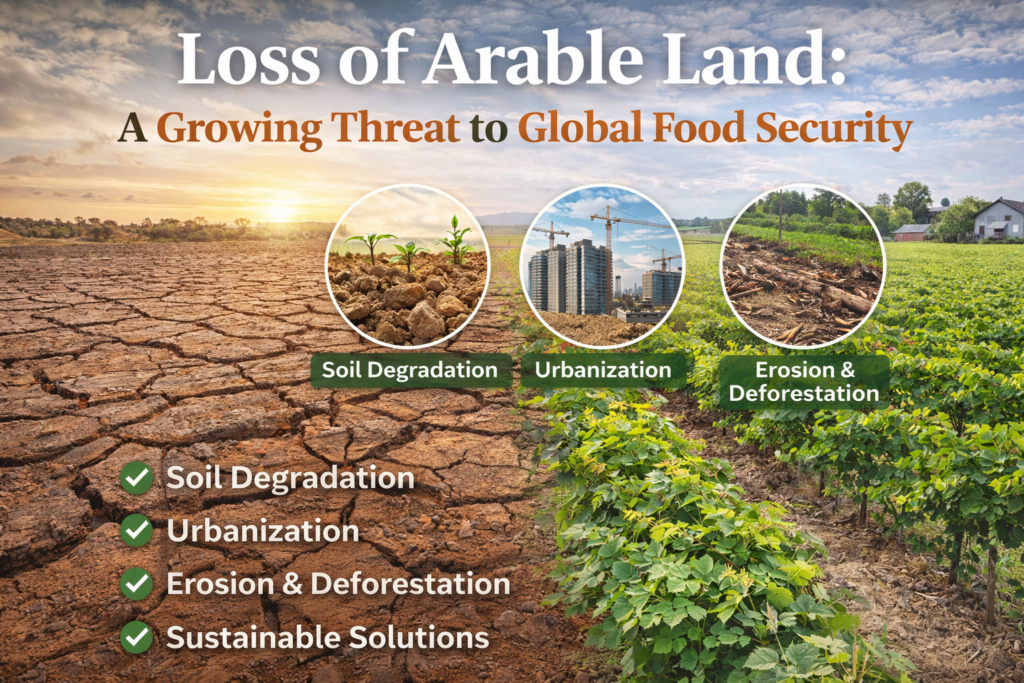
The decline of arable land is caused by several interconnected factors that affect soil health and land productivity.
Urbanization and Population Growth
One of the biggest reasons for farmland loss is the expansion of cities and infrastructure. As populations grow, more land is converted into housing, roads, factories, and commercial developments. This process permanently removes fertile farmland from agricultural use.
Soil Degradation and Erosion
Unsustainable farming practices such as excessive tillage, overgrazing, and improper irrigation contribute to soil erosion and degradation. Over time, these practices reduce soil fertility and make the land less productive for crop cultivation.
Deforestation
Large areas of forests are cleared every year for agriculture, urban expansion, and industrial activities. When natural vegetation is removed, soils become exposed to wind and water erosion, which accelerates land degradation.
Misuse of Agricultural Chemicals
Excessive or improper use of fertilizers and pesticides can damage soil structure and reduce beneficial microorganisms. This weakens the soil ecosystem and affects long-term soil fertility.
Impact on Food Production
The loss of arable land has serious consequences for agriculture and global food supply.
As fertile land decreases, farmers must produce more food from smaller areas. Degraded soils often hold less water and nutrients, making it harder to achieve high crop yields.
This situation leads to several challenges:
-
Lower crop productivity per hectare
-
Increased dependence on fertilizers, irrigation, and other inputs
-
Higher production costs for farmers
-
Greater vulnerability to droughts, floods, and climate change
If this trend continues, it could lead to higher food prices, increased poverty in rural areas, and potential food shortages in many parts of the world.
Sustainable Solutions to Protect Arable Land
Protecting the remaining arable land requires adopting sustainable agricultural practices and better land management strategies.
Conservation Agriculture
Techniques such as minimum tillage, crop rotation, and cover cropping help maintain soil structure and prevent erosion. These practices improve soil health and long-term productivity.
Efficient Resource Management
Farmers can improve productivity by using efficient irrigation systems, balanced fertilizer application, and improved crop varieties. These methods increase yields while reducing environmental damage.
Smart Farming Technologies
Modern digital tools such as farm management software, satellite monitoring, and precision agriculture technologies help farmers track soil conditions and optimize resource use.
Responsible Land Use Planning
Governments and policymakers must plan land use carefully to balance agricultural development with conservation of forests, wetlands, and biodiversity.
Conclusion
The loss of arable land is one of the most pressing challenges facing global agriculture today. With a growing population and increasing food demand, protecting fertile farmland has become essential for long-term food security.
By adopting sustainable farming practices, improving soil management, and using modern agricultural technologies, it is still possible to protect the world’s productive land and ensure food availability for future generations.