Olive Tree – The Living Tree of Health and Prosperity
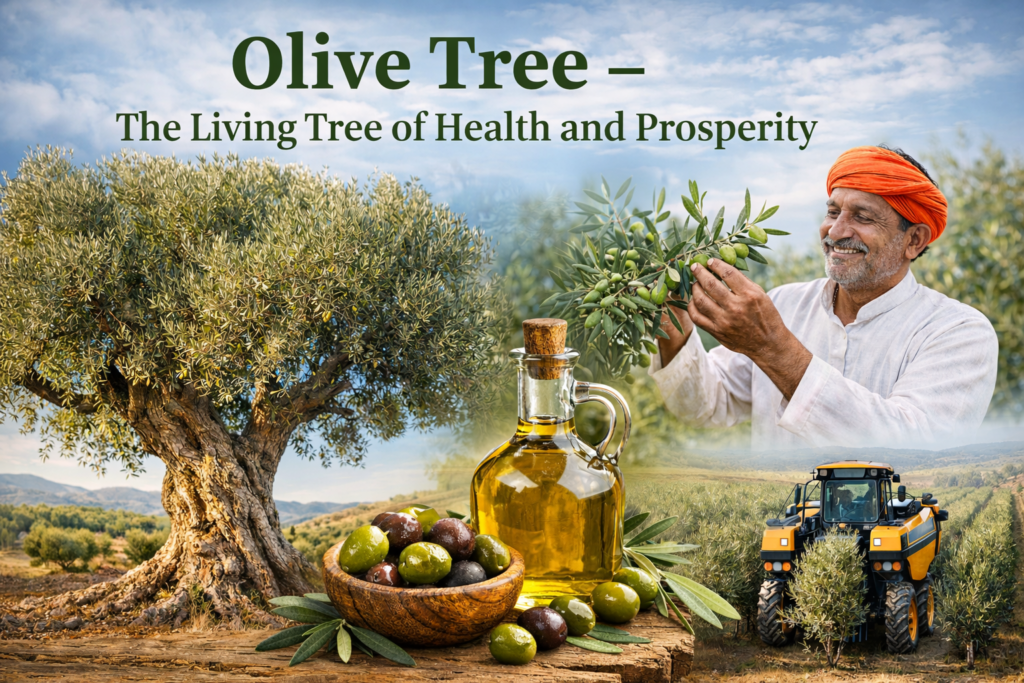
Olive Tree – The Living Tree of Health and Prosperity
The olive tree is widely known as the “Tree of Life” because of its long lifespan, nutritional value, and economic importance. For thousands of years, it has been cultivated across the Mediterranean region and other dry areas of the world. Today, olives and olive oil are recognized globally for their health benefits, culinary uses, and growing agricultural potential.
Apart from being an ancient crop, the olive tree represents resilience and sustainability. It can survive in dry climates, poor soils, and harsh environmental conditions, making it an important crop for regions where many other plants struggle to grow.
Olive Oil and Its Uses
Olive oil is extracted from the fruits of the olive tree and is considered one of the healthiest cooking oils available today. It is widely used in cooking, salad dressings, marinades, and baking. In addition to food uses, olive oil is also used in the production of cosmetics, soaps, skincare products, and some pharmaceutical items.
Among the various types of olive oil, extra virgin olive oil is considered the highest quality. It is produced without chemical processing and retains the natural aroma, flavor, and nutrients of the olives. Because of its purity, it is widely used in healthy diets around the world.
Refined olive oil, on the other hand, is processed using heat and chemical methods to remove impurities. While this type of oil has a longer shelf life and is usually less expensive, it often contains fewer natural nutrients and antioxidants compared to extra virgin olive oil.
Health Benefits of Olive Oil
Olive oil is widely appreciated for its numerous health benefits. It contains monounsaturated fats, which are considered beneficial for heart health. Regular consumption of good-quality olive oil may help maintain healthy cholesterol levels and reduce the risk of cardiovascular diseases.
Another major advantage of olive oil is its rich antioxidant content. Compounds such as polyphenols and vitamin E help protect the body’s cells from oxidative damage caused by free radicals. These antioxidants also support healthy ageing and help reduce inflammation in the body.
Because of these benefits, olive oil is a key component of the Mediterranean diet, which is often recommended by nutrition experts as one of the healthiest dietary patterns in the world.
Olive Cultivation in India
Although olives are traditionally grown in Mediterranean countries such as Spain, Italy, and Greece, India has recently started exploring olive cultivation. The state of Rajasthan has been a pioneer in this field, where pilot projects have been introduced to test olive farming under semi-arid conditions.
Government initiatives such as the National Mission on Oilseeds and Oil Palm (NMOOP) and Rashtriya Krishi Vikas Yojana (RKVY) have encouraged farmers to experiment with olive plantations. Trials have also been conducted in states like Maharashtra to study the crop’s adaptability to Indian climate and soil conditions.
With the support of Israeli agricultural experts and advanced farming technologies, India has been able to develop olive plantations covering more than 200 hectares.
Modern Techniques for Olive Farming
To increase productivity and profitability, farmers are adopting modern cultivation techniques. One common practice is grafting improved olive varieties onto strong rootstocks, which helps trees begin fruit production earlier.
High-density or super-intensive plantation systems are also being tested. In this system, trees are planted closer together, allowing mechanical harvesting and better yield per hectare.
Efficient irrigation management is another key factor in olive farming. Drip irrigation systems are widely used to provide water directly to the roots, reducing water wastage and improving crop performance in dry regions.
Environmental and Economic Importance
Olive trees are highly suitable for marginal and rocky soils where other crops may fail. Their deep root systems help stabilize the soil, reduce erosion, and improve environmental sustainability.
From an economic perspective, olives offer farmers opportunities to produce table olives, olive oil, and various value-added products. As demand for healthy edible oils continues to grow, olive cultivation could play an important role in reducing India’s dependence on imported oils while creating new income opportunities for farmers.