
Soil Erosion in Agriculture: Causes, Effects and Prevention Methods
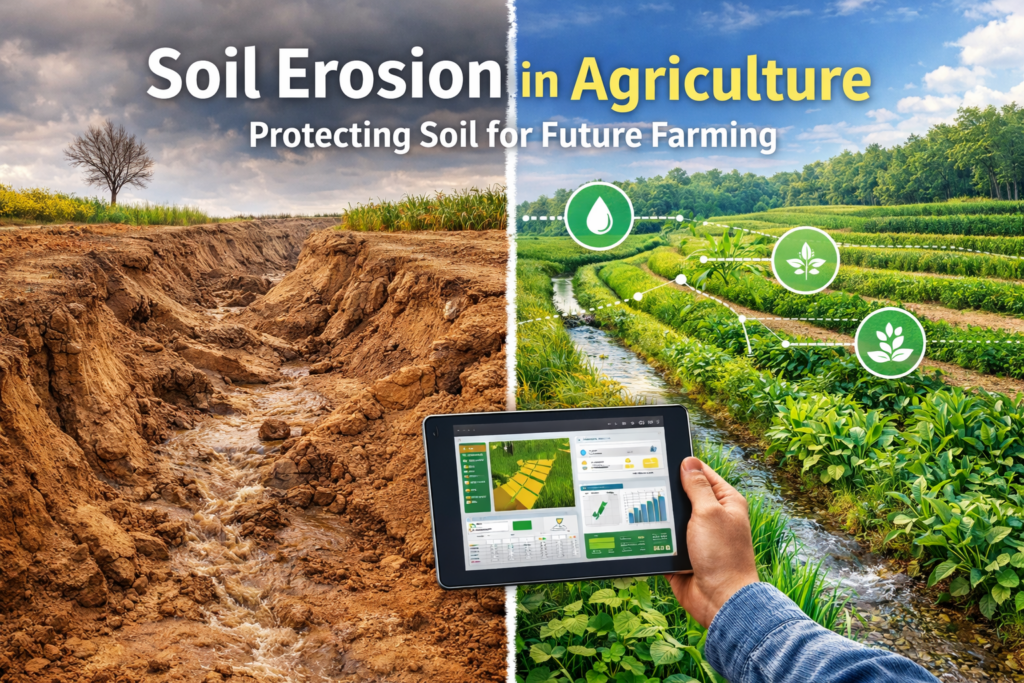
Soil Erosion in Agriculture: Causes, Effects and Prevention Methods
Soil is one of the most valuable natural resources for agriculture. Healthy soil supports crop growth, stores nutrients, and retains water needed for plant development. However, soil erosion is becoming a major challenge for farmers around the world. When the top layer of soil is removed by wind or water, farmland gradually loses its fertility and productivity.
Soil erosion may occur slowly over time, but its long-term impact on agriculture can be severe. Reduced soil fertility, lower crop yields, and higher production costs are some of the major consequences farmers face. Understanding the causes and adopting proper soil conservation practices can help protect farmland and ensure sustainable crop production.
What is Soil Erosion?
Soil erosion is the process in which the top layer of fertile soil (topsoil) is removed by natural forces such as rainwater, wind, or human activities. Topsoil contains essential nutrients, organic matter, and microorganisms that plants need to grow.
When this layer is lost, the remaining soil becomes less productive and may not support healthy crop growth. Soil erosion can occur gradually over many years or suddenly during heavy rainfall, storms, or strong winds.
Major Causes of Soil Erosion in Agriculture
Several factors contribute to soil erosion in agricultural land. Some of the most common causes include:
1. Heavy Rainfall and Water Runoff
Strong rainfall can wash away loose soil from fields, especially when the land is bare or sloped. Water runoff carries soil particles along with nutrients and deposits them in rivers or lower areas.
2. Wind Erosion
In dry and semi-arid regions, strong winds can lift and transport fine soil particles from open farmland. Fields without vegetation cover are particularly vulnerable to wind erosion.
3. Intensive Tillage
Frequent plowing and soil disturbance break down soil structure and leave the surface exposed. This makes soil more vulnerable to erosion during rainfall or windy conditions.
4. Deforestation and Vegetation Loss
Trees, grasses, and crop residues help hold soil together with their roots. Removing vegetation exposes soil to natural forces and increases erosion risk.
5. Overgrazing
When livestock graze excessively, they remove protective plant cover from the soil surface. This weakens soil stability and allows erosion to occur more easily.
Effects of Soil Erosion on Agriculture
Soil erosion can have serious environmental and economic impacts on farming systems.
Loss of Soil Fertility
The topsoil layer contains nutrients and organic matter essential for plant growth. Once this layer is lost, soil fertility decreases significantly.
Reduced Crop Yields
Poor soil quality leads to weaker plant growth and lower agricultural productivity. Farmers may experience declining harvests over time.
Increased Farming Costs
To compensate for nutrient loss, farmers may need to use more fertilizers and irrigation. This increases production expenses.
Water Pollution
Eroded soil often carries fertilizers and pesticides into rivers and lakes. This pollutes water sources and harms aquatic ecosystems.
Long-Term Land Degradation
Continuous soil erosion can permanently damage farmland and reduce its agricultural value.
Effective Methods to Prevent Soil Erosion
Farmers can protect their land and reduce soil erosion by adopting several conservation practices.
Crop Rotation
Growing different crops in sequence helps maintain soil structure and improves soil fertility. Deep-rooted crops stabilize soil and reduce erosion risk.
Cover Crops
Planting cover crops such as legumes or grasses protects soil from rain impact and improves organic matter content.
Contour Farming
Planting crops along the natural contours of sloping land slows down water flow and reduces soil loss.
Reduced or No-Till Farming
Minimizing soil disturbance helps maintain soil structure and keeps crop residues on the surface, which protects soil from erosion.
Terracing
Terraces create flat planting surfaces on steep slopes and prevent water from flowing rapidly downhill.
Windbreaks
Planting trees or shrubs around farmland reduces wind speed and protects soil from wind erosion.
Importance of Soil Conservation for Sustainable Farming
Protecting soil is essential for long-term agricultural sustainability. Healthy soil improves water retention, supports beneficial microorganisms, and provides nutrients required for crop growth.
Farmers who adopt soil conservation practices not only protect their land but also improve productivity and reduce farming costs over time. Sustainable soil management ensures that farmland remains fertile for future generations.
Role of Modern Technology in Soil Management
Modern agricultural technologies are helping farmers monitor soil health and prevent erosion. Digital tools such as farm management software, satellite monitoring, and weather forecasting systems provide valuable information for better farm decisions.
These technologies help farmers identify erosion-prone areas, track soil conditions, and implement timely conservation practices. By combining traditional farming knowledge with modern technology, agriculture can become more efficient and environmentally sustainable.
Conclusion
Soil erosion is a serious threat to agriculture, but it can be managed through proper farming practices and soil conservation methods. Protecting topsoil is essential for maintaining crop productivity, environmental sustainability, and global food security.
By adopting sustainable farming techniques and modern agricultural technologies, farmers can reduce soil erosion and preserve the health of their land for many years to come.