Brazil Coffee Farm to Winery Transformation with Digital Farm Management
Brazil Coffee Farm to Winery Transformation with Digital Farm Management
Introduction
Transforming a traditional coffee plantation into a premium winery is a bold and complex journey. In Brazil, one such remarkable transformation has taken place at Vinícola Guaspari in Espírito Santo do Pinhal, São Paulo. By combining innovative agricultural practices with advanced digital farm management software, the estate has successfully evolved into a globally recognized producer of high-quality wines, olives, and coffee.
From Coffee Fields to Award-Winning Wines
Founded in 2006, Vinícola Guaspari set out with a clear ambition—to prove that Brazil can produce world-class wines. One of their most notable innovations is the adoption of the double pruning technique, which shifts grape harvesting to winter. This method helps replicate the climatic conditions of traditional wine-producing regions.
Each vineyard plot is carefully managed and vinified separately, ensuring only the best grapes are selected. This meticulous approach has significantly enhanced the quality of production and positioned Brazilian wines competitively on the global stage.
Challenges Before Digitalization
Before adopting digital tools, vineyard operations at Guaspari relied heavily on manual records and fragmented historical data. This led to several operational challenges:
- Delayed decision-making for irrigation and fertilization
- Inefficient pest and disease management
- Lack of real-time field insights
- Inconsistent fruit quality
The team realized they needed more than basic traceability—they required a comprehensive system capable of supporting real-time, data-driven decisions.
Implementing AGRIVI Farm Management Software
To overcome these limitations, Guaspari implemented AGRIVI Farm Management Software (FMS). This platform became the central hub for all agricultural operations.
Key features include:
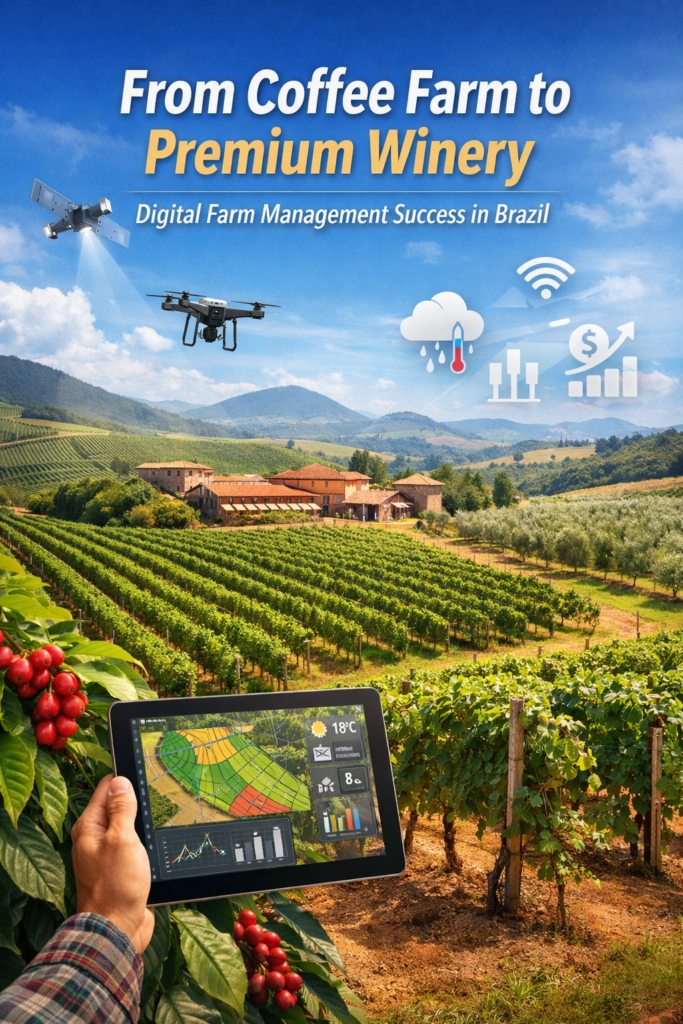
- Satellite-based vineyard mapping
- Real-time monitoring of field activities
- Weather tracking and risk alerts
- Cost tracking linked to harvest planning
- Centralized agronomic and financial data
With AGRIVI FMS, the team gained a complete overview of each vineyard plot, enabling faster and more accurate decision-making.
Practical Benefits in Daily Operations
After adopting the digital system, Guaspari experienced significant improvements in daily operations:
- Streamlined workflows and better coordination
- Accurate irrigation and nutrient scheduling
- Reduced input waste and optimized resource use
- Improved crop protection strategies
- Enhanced traceability from vineyard to bottle
This level of control ensures consistent quality and strengthens compliance with international standards.
Training, Support, and User Adoption
The implementation process was smooth, supported by proper training and ongoing technical assistance. The software’s intuitive interface made it easy for staff across departments to adapt quickly.
Benefits observed by the team:
- Simplified data organization
- Improved communication between departments
- Easy-to-understand reports for faster action
- Better alignment between agronomy, management, and finance
Looking Ahead: Data-Driven Growth
With a strong digital foundation in place, Vinícola Guaspari is now focused on leveraging accumulated data for future growth. The goal is to:
- Further optimize vineyard practices
- Increase productivity and grape quality
- Reduce costs through precise input management
- Strengthen competitiveness in global markets
By blending traditional winemaking expertise with modern agricultural technology, the winery is setting a powerful example of data-driven agriculture in action.
Conclusion
The transformation of Vinícola Guaspari demonstrates how digital farm management can revolutionize agriculture. From improved efficiency to enhanced product quality, technology plays a critical role in modern farming success.
For farmers and agribusinesses worldwide, this case highlights a clear message:
embracing digital tools is no longer optional—it is essential for sustainable growth and global competitiveness.