How Technology Helps Farmers Increase Profits and Protect the Environment
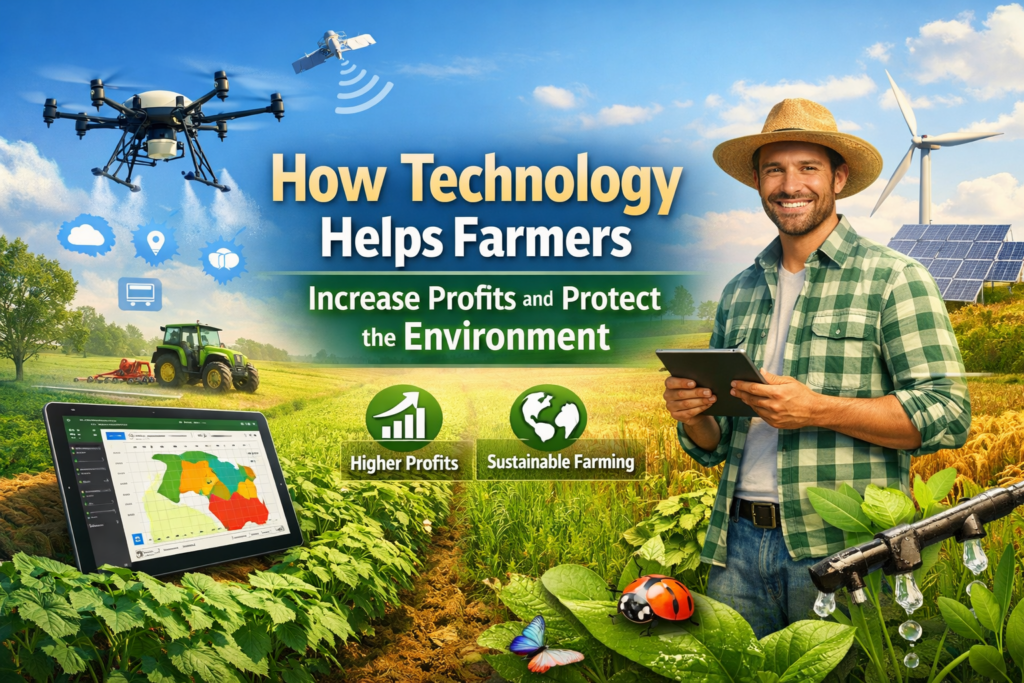
How Technology Helps Farmers Increase Profits and Protect the Environment
Introduction
Modern agriculture is evolving rapidly as farmers face challenges like rising input costs, unpredictable weather conditions, and stricter environmental regulations. To stay competitive and profitable, farmers are increasingly adopting digital technologies that improve efficiency and decision-making.
What Is Smart Farming?
Smart farming, also known as digital agriculture, refers to the use of advanced technologies such as software, sensors, and data analytics to manage farm operations more effectively.
Key components of smart farming include:
- Farm management software
- Weather forecasting tools
- IoT-based sensors
- Drones and automation
- Data analytics systems
These tools help farmers monitor their fields in real time and make precise decisions that improve productivity.
Benefits of Farm Management Software
Farm management software acts as a central control system for agricultural activities. It collects and organizes data from different sources, giving farmers a complete overview of their operations.
With these tools, farmers can:
- Optimize the use of fertilizers and pesticides
- Plan irrigation more efficiently
- Track labor, fuel, and other operational costs
- Maintain detailed records for traceability and compliance
This data-driven approach reduces guesswork and improves overall farm management.
Cost Reduction and Increased Profitability
One of the biggest advantages of using technology in agriculture is cost efficiency. Digital tools help farmers reduce unnecessary expenses and improve yield outcomes.
Key financial benefits include:
- Reduction in input costs by 10–20%
- Lower risk of crop loss through better monitoring
- Improved yield quality and quantity
- Higher overall profitability
Sustainable Farming Practices
Technology not only improves profits but also supports environmentally friendly farming practices.
Some sustainable methods enabled by technology include:
- Crop rotation to maintain soil fertility
- Reduced tillage to prevent soil erosion
- Precision application of inputs to reduce waste
- Climate-smart farming techniques to handle droughts and pests
These practices help conserve natural resources while maintaining productivity.
The Future of Agriculture
As digital tools become more affordable and accessible, smart farming is quickly becoming essential rather than optional. Farmers who adopt these technologies early can gain a significant advantage in terms of productivity, profitability, and sustainability.
Conclusion
Technology is transforming agriculture into a smarter and more sustainable industry. By adopting digital solutions, farmers can increase their income, reduce costs, and protect the environment. The future of farming lies in innovation, and those who embrace it will lead the way.