How Traceability Builds Consumer Trust in the Food Supply Chain
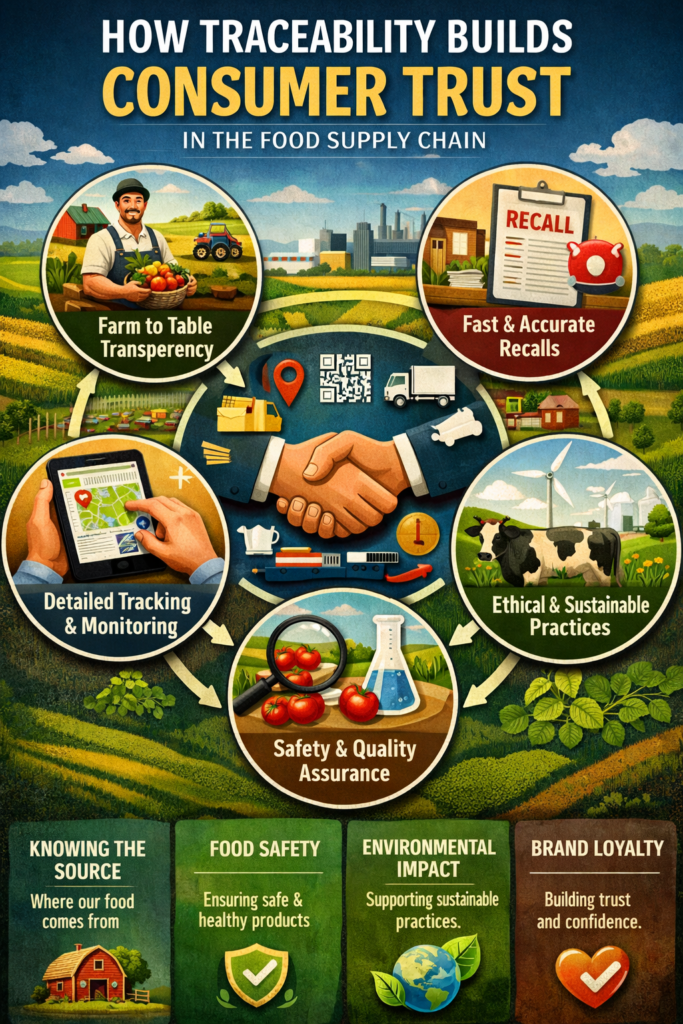
How Traceability Builds Consumer Trust in the Food Supply Chain
Why Traceability Matters
Traceability means the ability to track a food product and its ingredients through all stages of production, processing, and distribution. It provides a documented history of where the food came from, how it was produced, and who handled it at each stage.
For modern consumers who are increasingly concerned about food safety, health, and sustainability, this information directly influences purchasing decisions. Brands that can clearly demonstrate product history gain a competitive advantage in crowded markets.
Four Key Reasons for Traceability
-
Greater supply chain visibility
Traceability makes it possible to follow a product from the farm to the final consumer, identifying each link in the chain. This visibility helps companies quickly detect and isolate problems such as contamination with E. coli or salmonella, reducing the impact on public health and on business. -
Transparency and consumer confidence
By sharing information about origin, production practices, and processing methods, companies create transparency that consumers can see and understand. When people know where their food comes from and how it was produced, they are more likely to trust the brand and stay loyal to it. -
Compliance with regulations
Food safety legislation around the world increasingly requires detailed records for every stage of the supply chain. Traceability systems help companies meet these legal requirements, avoid penalties, and demonstrate due diligence during audits. -
Risk management and faster recalls
When a food safety incident occurs, a strong traceability system allows quick identification of affected lots and targeted product recalls. This limits consumer exposure, reduces financial losses, and protects long‑term brand reputation.
Role of Technology and AGRIVI
Digital tools are now central to implementing effective traceability across complex supply chains. Modern platforms record data on inputs, field operations, processing steps, storage, and logistics in a structured and accessible way.
AGRIVI offers an end-to-end traceability solution that connects farm production with retail and final consumers. The system captures key data such as crop variety, treatments, inputs, and production practices, then links this information to specific product batches.
QR Codes and Consumer Communication
One of the most practical ways to deliver traceability information to consumers is through QR codes on product packaging. When scanned, these codes can show data such as farm of origin, pesticides used, production date, and sustainability practices.
AGRIVI’s solution allows companies to generate QR codes that directly connect to verified production records stored in the system. This turns simple packaging into a digital information channel, strengthening consumer trust and supporting premium positioning for safe and sustainable products.
Benefits for Farmers and Food Companies
-
Farmers can document good agricultural practices, responsible pesticide use, and compliance with standards, which helps them access better markets and contracts. This documentation supports premium pricing for high-quality and sustainably produced food.
-
Food processors and retailers can differentiate their brands by offering transparent, traceable products that respond to rising demand for safe and healthy food. At the same time, they improve internal efficiency by having clear records for planning, quality control, and audits.
Overall, robust traceability builds a bridge of trust between the field and the consumer, turning data into a strategic asset for the entire food value chain.