
Spring Crop Protection: Planning Your First Spray Window for Better Yield
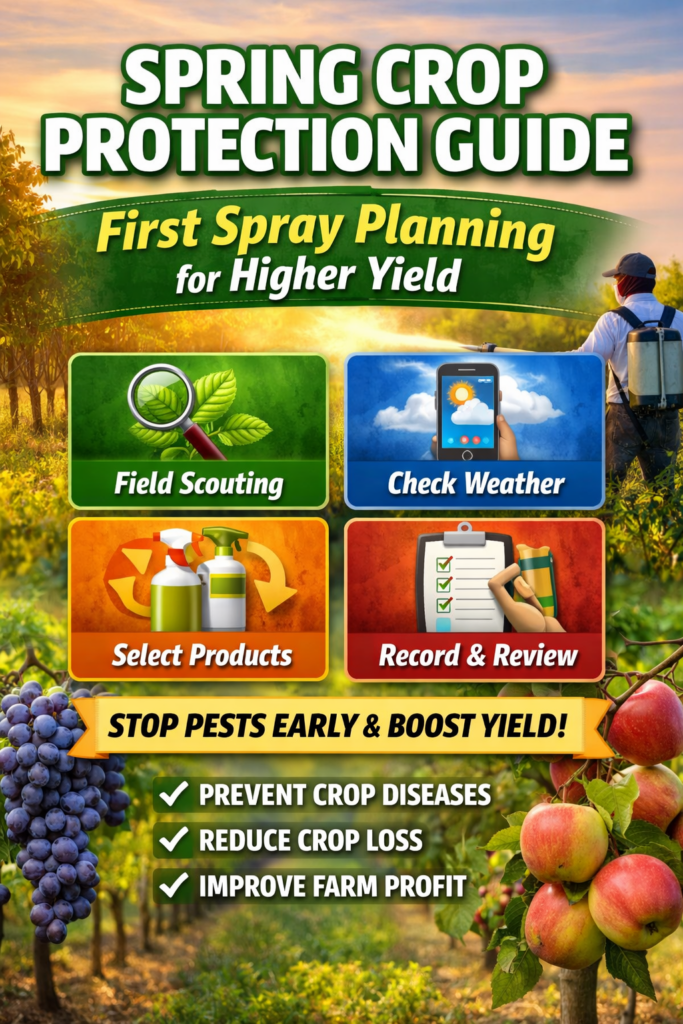
Spring Crop Protection: Planning Your First Spray Window for Better Yield
Introduction
Spring is a crucial season for farmers, especially those cultivating fruits, vegetables, and vineyard crops. One of the most important decisions during this period is planning the first crop protection spray.
This early spray acts as a preventive shield, protecting crops from pests and diseases before they become visible. If done correctly, it can significantly improve both yield and quality. However, poor timing or improper planning can result in serious losses.
Research indicates that nearly 20–40% of crop yield losses occur due to delayed or ineffective crop protection practices. Therefore, proper planning of the first spray is essential for successful farming.
Why the First Spray is Important
During early growth stages, crops are highly vulnerable because:
-
New leaves and shoots are soft and sensitive
-
Pest activity begins to increase
-
Diseases develop internally before visible symptoms appear
For example, in vineyards, fungal infections can develop silently and later affect flowering and fruit development if not controlled in time.
Farmers who take preventive action always perform better than those who wait for visible damage.
Step-by-Step Guide to First Spray Planning
1. Field Scouting (Regular Monitoring)
Regular inspection of the field is the foundation of effective crop protection.
Best Practices:
-
Visit fields at least 2–3 times per week
-
Check both upper and lower leaf surfaces
-
Look for pest presence, eggs, or disease symptoms
-
Observe crop growth stage carefully
Keeping proper notes helps in identifying patterns and making better decisions.
2. Weather-Based Spray Planning
Weather conditions play a major role in pest and disease development.
Key Factors:
-
Temperature
-
Humidity
-
Rainfall
-
Wind speed
Warm and humid conditions favor fungal diseases, while sudden weather changes can trigger pest outbreaks.
Using weather data helps farmers:
-
Predict risk periods
-
Apply sprays at the right time
-
Avoid unnecessary spraying
3. Right Product Selection and Rotation
Choosing the correct crop protection product is essential for effective control.
Important Points:
-
Use only recommended pesticides or fungicides
-
Follow label instructions and correct dosage
-
Ensure crop safety and compliance with regulations
-
Rotate chemicals with different modes of action
Rotation helps prevent pests and diseases from developing resistance, ensuring long-term effectiveness.
4. Record Keeping and Evaluation
Maintaining proper records of each spray operation improves future planning.
Record Details Such As:
-
Date and time of spray
-
Product name and dosage
-
Weather conditions
-
Field or plot details
These records allow farmers to compare results, analyze performance, and refine strategies for upcoming seasons.
Building a Smart Crop Protection System
Successful farmers follow a structured cycle:
Scout → Analyze → Decide → Spray → Record → Improve
Instead of relying on guesswork, they use data and past experience to make informed decisions. This approach helps in reducing risks and improving overall farm productivity.
Conclusion
The first spray in spring is not just a routine task—it is a strategic step that determines the success of the entire season.