
Phytoplasma Diseases in Grapevines: Symptoms, Spread, and Management
Phytoplasma Diseases in Grapevines: Symptoms, Spread, and Management
Phytoplasmas are microscopic, bacteria-like plant pathogens that pose a serious threat to grapevine production around the world. These pathogens live in the phloem tissue of plants, where they interfere with the movement of nutrients and disrupt normal plant growth. In vineyards across Europe, North America, and other grape-growing regions, phytoplasma infections are responsible for several damaging diseases that reduce grape yield and quality.
Because these pathogens are mainly spread by sap-sucking insects, controlling them can be challenging. Understanding how phytoplasma diseases develop, spread, and affect grapevines is essential for effective vineyard management.
What Are Phytoplasma Diseases in Grapevines?
Phytoplasmas cause a group of disorders commonly known as grapevine yellows diseases. Among the most destructive are flavescence dorée and bois noir.
These diseases affect the internal transport system of grapevines, leading to abnormal growth and reduced productivity. Once infected, grapevines struggle to transport nutrients properly, resulting in weak plant development and poor fruit formation.
If phytoplasma infections are left unmanaged, they can gradually weaken vines and may eventually cause plant death, resulting in significant economic losses for grape growers.
Major Symptoms in Vineyards
Phytoplasma infections produce distinctive symptoms that are often visible in the vineyard canopy.
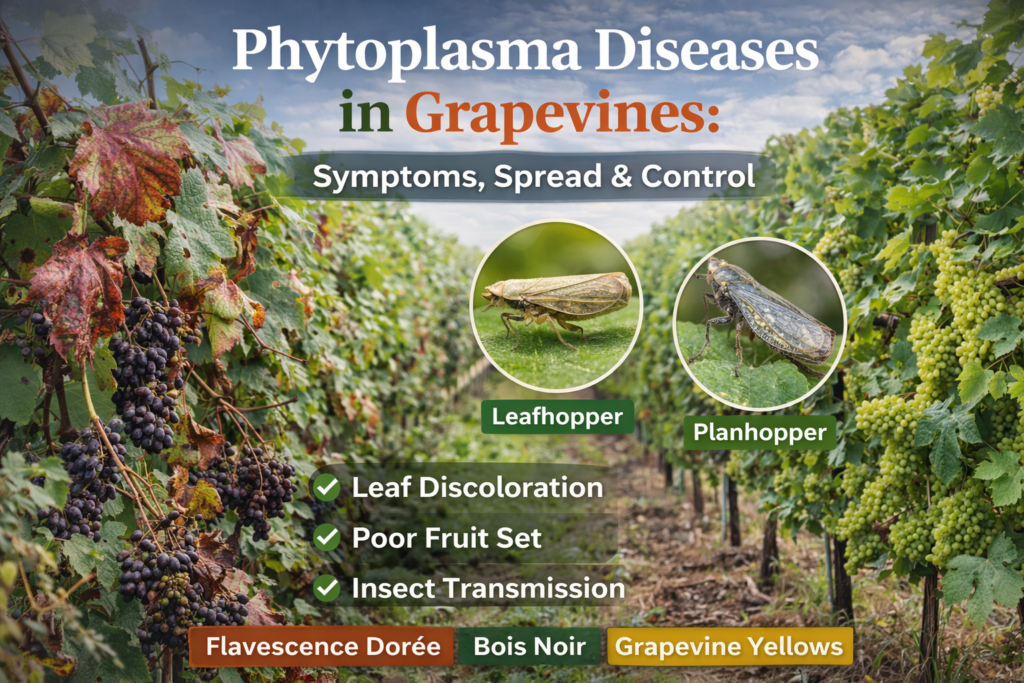
One of the most noticeable signs is leaf discoloration. In white grape varieties, infected leaves usually turn yellow, while in red grape varieties they develop a reddish color. The leaves may also roll downward and become thick and brittle.
Another common symptom is the failure of shoots to mature properly. Healthy grapevine shoots normally become woody by the end of the growing season, but infected shoots often remain soft and green.
Fruit production is also affected. Infected vines frequently show poor fruit set, and grape clusters may develop shriveled or dried berries. In severe cases, berries may drop prematurely.
During winter, heavily infected vines may experience branch dieback, where parts of the plant turn black and die.
How Phytoplasma Diseases Spread
Phytoplasma diseases spread primarily through insect vectors that feed on plant sap. These insects pick up the pathogen from infected plants and then transmit it to healthy vines while feeding.
Different phytoplasma diseases are associated with different insect carriers.
For example, flavescence dorée spreads rapidly through a leafhopper species called Scaphoideus titanus. This insect feeds directly on grapevines and lays eggs on the vines themselves, allowing the disease to spread quickly within vineyards.
On the other hand, bois noir is usually transmitted by planthoppers such as Hyalesthes obsoletus. These insects often live on certain weed hosts before moving to grapevines, carrying the pathogen with them.
Because of this insect-based transmission, vineyards located near unmanaged vegetation or weed hosts may face higher infection risks.
Management and Control Strategies
Managing phytoplasma diseases requires a combination of vector control and removal of infected plants.
One of the most effective methods is removing and destroying infected vines. Eliminating diseased plants helps reduce the source of infection and prevents further spread within the vineyard.
Controlling insect vectors is equally important. Growers often apply insecticides to reduce populations of leafhoppers and planthoppers, especially during periods when these insects are most active.
Regular monitoring of vineyards helps detect symptoms early, allowing farmers to take action before the disease spreads widely.
Pruning out infected branches and maintaining vineyard hygiene can also help reduce disease pressure.
Prevention and Healthy Planting Material
Prevention is the most effective way to protect vineyards from phytoplasma diseases.
Farmers should always use certified disease-free planting material when establishing new vineyards. Planting infected vines can introduce phytoplasma pathogens into previously healthy fields.
Monitoring insect populations and controlling weeds that serve as insect hosts are also important preventive measures.
When these strategies are combined with regular vineyard inspections and proper pest management, growers can significantly reduce the risk of phytoplasma outbreaks.
Conclusion
Phytoplasma diseases represent a serious challenge for grape growers worldwide. These tiny pathogens can cause severe damage to vineyards by weakening vines, reducing grape yield, and affecting fruit quality.
However, with careful monitoring, proper vector control, removal of infected plants, and the use of certified planting material, farmers can manage these diseases effectively.