Farm Management Software: A Smart Investment for Modern Farming
Modern agriculture is changing rapidly. Farmers today face challenges such as unpredictable weather, rising input costs, labor shortages, and fluctuating market prices. To overcome these challenges, many growers are turning to farm management software, a digital solution that helps manage farm operations more efficiently and profitably.
Farm management software allows farmers to track field activities, monitor crop health, manage resources, and analyze farm data in one place. By using technology and data-driven insights, farmers can make better decisions that improve productivity and reduce unnecessary costs.
Why Investing in Farm Management Software Pays
One of the biggest advantages of farm management software is its ability to improve farm planning and decision-making. Traditional farming often relies on experience and manual records, but digital platforms provide real-time information that helps farmers plan each activity more accurately.
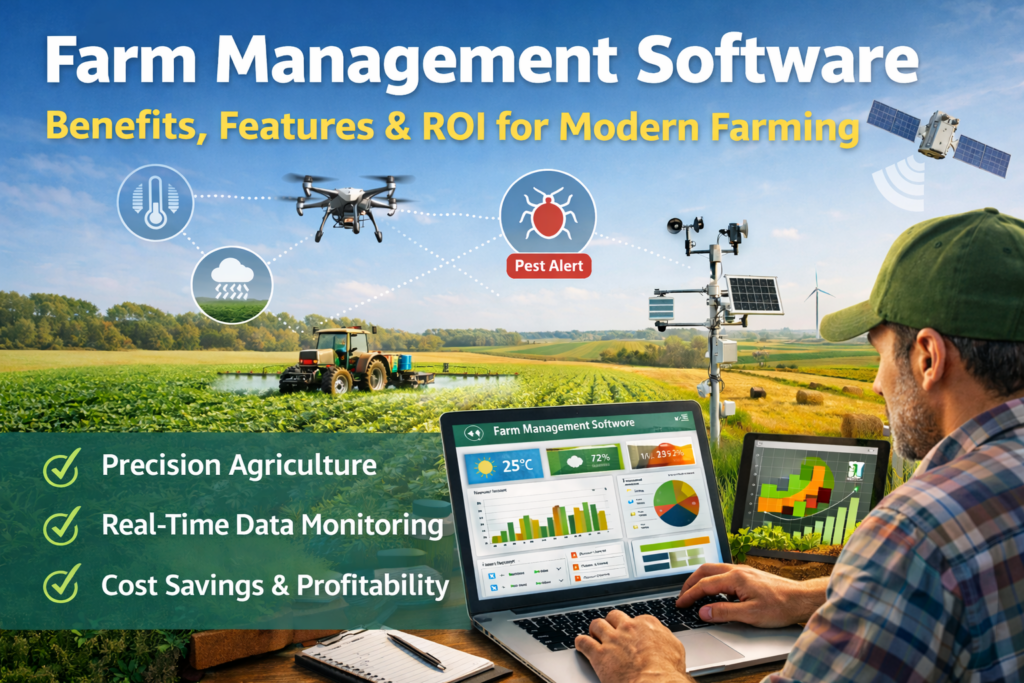
Farm management systems combine data from weather forecasts, soil conditions, satellite imagery, and pest or disease alerts. This integrated view enables farmers to take timely action, whether it is irrigation scheduling, fertilizer application, or crop protection. As a result, farmers can avoid mistakes that lead to crop damage or yield losses.
Better planning also ensures that important farming activities are not delayed or missed, which is essential for achieving high yields and maintaining crop quality.
Improving Crop Yield and Quality
Farm management software helps farmers monitor crop growth more effectively. Through digital dashboards and mobile apps, growers can track the condition of their fields, observe vegetation health indicators, and analyze production trends.
By identifying issues early, such as nutrient deficiencies or pest outbreaks, farmers can respond quickly before the problem spreads across the field. This early detection significantly improves crop yield and overall product quality.
Higher crop quality also means better market value, which directly increases farm income.
Cutting Waste and Reducing Input Costs
Another major benefit of farm management software is better control over farm inputs such as fertilizers, pesticides, and seeds. The software records every farm activity including product type, dosage, field location, and application date.
With this detailed tracking system, farmers can analyze where resources are being overused and adjust their application rates. This helps reduce unnecessary spending on chemicals and fertilizers while still maintaining crop productivity.
In addition, keeping accurate records ensures compliance with food safety regulations and buyer requirements, helping farmers avoid crop rejection due to residue issues.
From Reactive to Predictive Farming
Digital farm management tools also function as an early warning system. Many platforms provide predictive alerts related to weather changes, pest pressure, disease outbreaks, and optimal spraying windows.
Instead of reacting after damage has already occurred, farmers can take preventive measures based on these alerts. This proactive approach reduces risks and helps maintain stable crop production even in unpredictable climates.
Over time, the software also builds a detailed historical database of each field. Farmers can use this information to refine their strategies and improve performance in future growing seasons.
Precision Agriculture for Better Resource Use
Many advanced farm management platforms include precision agriculture features. These tools use satellite imagery, drone data, soil analysis, and yield maps to guide farmers in applying inputs more precisely.
Variable-rate application technology ensures that fertilizers, seeds, and crop protection products are applied only where they are needed and in the right amounts. This targeted approach improves efficiency and reduces environmental impact.
By minimizing over-application and nutrient loss, farmers can protect soil health while also saving money on inputs.
Faster Return on Investment
Compared with many traditional agricultural investments, farm management software offers a relatively quick return on investment. Machinery or irrigation infrastructure often requires several years to recover costs, but digital farm systems can generate measurable benefits within a shorter time.
Farmers who actively use farm management software often experience improved yields, better crop quality, and reduced input expenses within the first few seasons. In many cases, the investment pays for itself in about two years.
This makes farm management software a valuable tool for both small-scale and large-scale farming operations.
Conclusion
Farm management software is becoming an essential part of modern agriculture. By combining real-time data, predictive insights, and precision farming tools, it enables farmers to manage their operations more efficiently and profitably.
As agriculture continues to evolve with technology, farmers who adopt digital farm management solutions will be better prepared to handle future challenges while improving productivity and sustainability.