
Botrytis Bunch Rot in Grapes: Prevention and Control for Maharashtra Vineyards
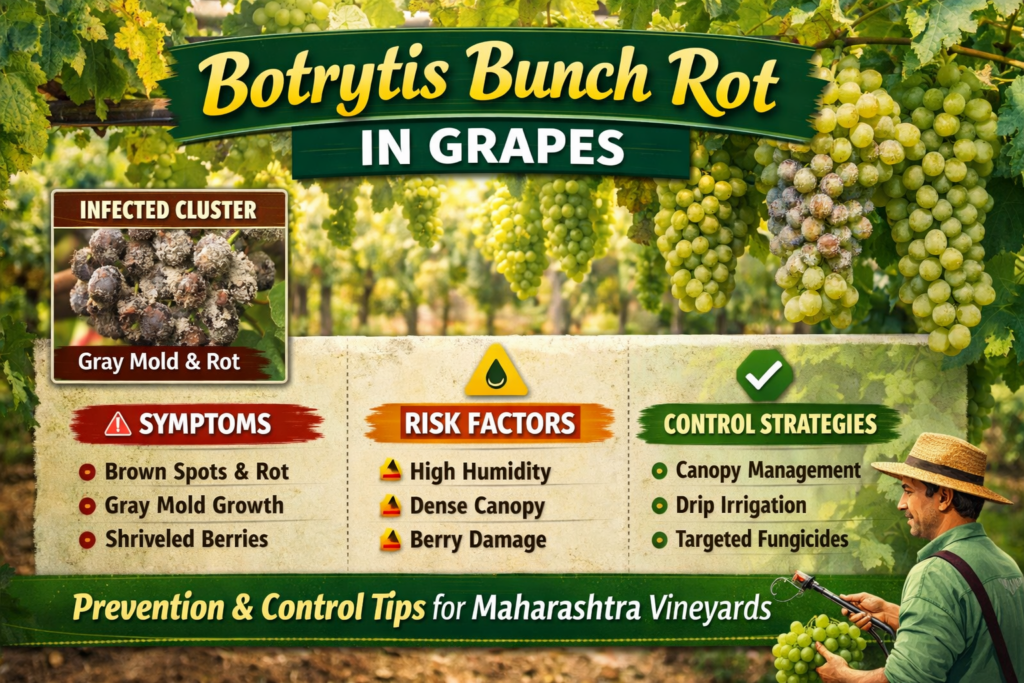
Botrytis Bunch Rot in Grapes: Prevention and Control for Maharashtra Vineyards
Grape cultivation in Maharashtra requires precise disease management to maintain yield and export-quality fruit. While powdery mildew and downy mildew are the primary fungal threats, Botrytis bunch rot can cause serious losses when humid weather coincides with berry ripening. Preventing this disease requires proper vineyard design, preventive crop management, and timely protection measures.
What is Botrytis Bunch Rot?
Botrytis bunch rot is caused by the fungus Botrytis cinerea, which infects grape berries through small injuries such as:
-
insect feeding damage
-
cracks in berry skin
-
hail injury
-
mechanical wounds
Symptoms
-
brown spots on berries
-
soft watery rot
-
gray fuzzy mold under humid conditions
-
shriveled berries in dry weather
-
complete bunch decay in severe cases
The disease spreads rapidly in cool, humid, and wet weather, especially when bunches remain wet for extended periods.
In Maharashtra’s tropical climate, Botrytis occurs less frequently than mildew diseases but can become severe if rainfall occurs close to harvest.
Conditions That Favor Botrytis
Botrytis thrives when moisture and poor airflow create a favorable environment.
Major Risk Factors
✔ Dense canopy with poor ventilation
✔ Compact grape bunches
✔ Excess nitrogen fertilization
✔ Overhead irrigation or prolonged leaf wetness
✔ Berry injuries caused by insects or disease
✔ Rainfall during ripening stage
Understanding these conditions helps growers prevent outbreaks.
Preventive Vineyard Management
Prevention is the most effective and economical strategy against Botrytis.
1. Balanced Nutrition
-
Avoid excessive nitrogen fertilization.
-
Maintain balanced vine growth to prevent dense foliage.
2. Canopy Management
-
Prune properly to improve airflow.
-
Remove excess leaves around bunches.
-
Allow sunlight penetration to dry moisture quickly.
3. Improve Air Circulation
-
Maintain proper row spacing.
-
Train vines to allow wind movement through the canopy.
4. Moisture Management
-
Prefer drip irrigation instead of overhead irrigation.
-
Avoid irrigation close to harvest.
-
Prevent water stagnation.
5. Pest & Disease Management
-
Control grape moths and other pests.
-
Manage powdery and downy mildew.
-
Healthy berries reduce infection entry points.
Chemical and Biological Control
When weather conditions favor infection, protective treatments may be necessary.
Fungicide Options
Common botrycides include:
-
Iprodione
-
Vinclozolin
-
Fenhexamid
-
Cyprodinil + Fludioxonil mixtures
⚠ Always follow label directions and observe pre-harvest intervals.
Spray Timing Tips
-
Apply before rainy or humid weather.
-
Protect bunches during ripening.
-
Avoid unnecessary sprays using weather forecasts.
Resistance Management
-
Rotate fungicides with different modes of action.
-
Avoid repeated use of the same product.
Biological Control Options
-
Bacillus-based biofungicides
-
Trichoderma formulations
-
Beneficial microbial products
These help reduce chemical dependence and support residue-free production.