
Apple Cider Vinegar as a Natural Herbicide: A Practical Guide for Farmers & Gardeners
Apple Cider Vinegar as a Natural Herbicide: A Practical Guide for Farmers & Gardeners
Apple cider vinegar is gaining popularity as a natural weed control solution, especially among farmers and home gardeners aiming to reduce chemical use. It offers a short-term, eco-friendly option for managing young weeds in fields, orchards, and kitchen gardens.
How Apple Cider Vinegar Controls Weeds
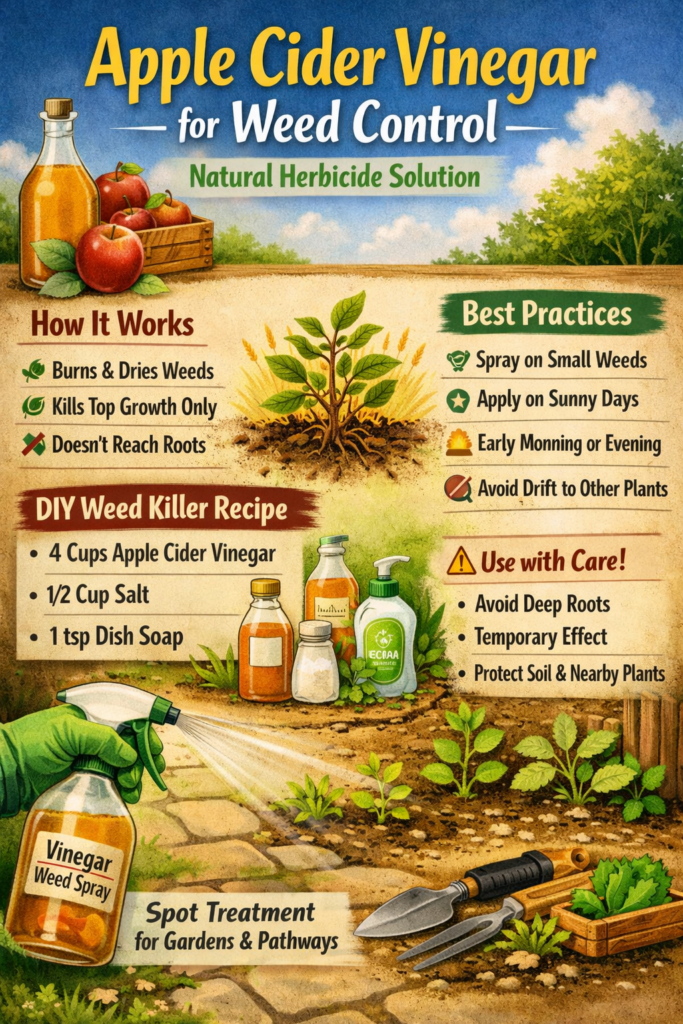
Apple cider vinegar contains acetic acid, which burns and dries out the soft green tissues of weeds upon contact.
-
Works only on plant parts above the soil surface
-
Does not kill roots
-
Most effective on young, tender annual weeds
-
Perennial weeds may regrow from roots
Under bright sunlight, treated weeds can wilt within hours as moisture rapidly evaporates from the damaged tissues.
Because roots remain alive, repeat applications may be needed for regrowth control.
Homemade Herbicide Recipe
You can prepare a simple and effective weed spray at home:
Ingredients
-
4 cups apple cider vinegar
-
½ cup common salt
-
1 teaspoon liquid dish soap
Method
-
Pour vinegar into a container.
-
Add salt and stir until fully dissolved.
-
Mix in dish soap (helps spray stick to leaves).
-
Fill into a hand sprayer.
-
Spray directly on unwanted plants.
Mild Version
Mix vinegar with water in a 1:1 ratio for a gentler solution that reduces crop injury risk.
Best Practices for Application
✔ Target weeds less than 2 weeks old
✔ Spray during calm weather to avoid drift
✔ Apply in morning or evening to reduce evaporation
✔ Use spot treatment between crop rows
In regions like Maharashtra, this method works well for:
-
Orchard inter-rows
-
Vegetable beds
-
Pathways and bunds
-
Kitchen gardens
Tip: Always test on a small area first to observe crop safety.
Limitations & Precautions
While natural, apple cider vinegar is not a permanent weed solution.
⚠ Works only as a contact herbicide
⚠ Deep-rooted weeds may regrow
⚠ Excess use can lower soil pH
⚠ May harm beneficial soil organisms if overused
Integrating with Sustainable Weed Management
For long-term results, combine vinegar spray with:
-
Mulching
-
Hand weeding
-
Crop rotation
-
Cover cropping
Conclusion
Apple cider vinegar can be a useful natural, short-term weed control tool when used carefully. It is best suited for young weeds and spot treatment areas. When integrated with sustainable farming practices, it helps reduce chemical dependency while maintaining effective weed management.