
Apple Cider Vinegar: A Simple, Farm-Friendly Weed Control Option
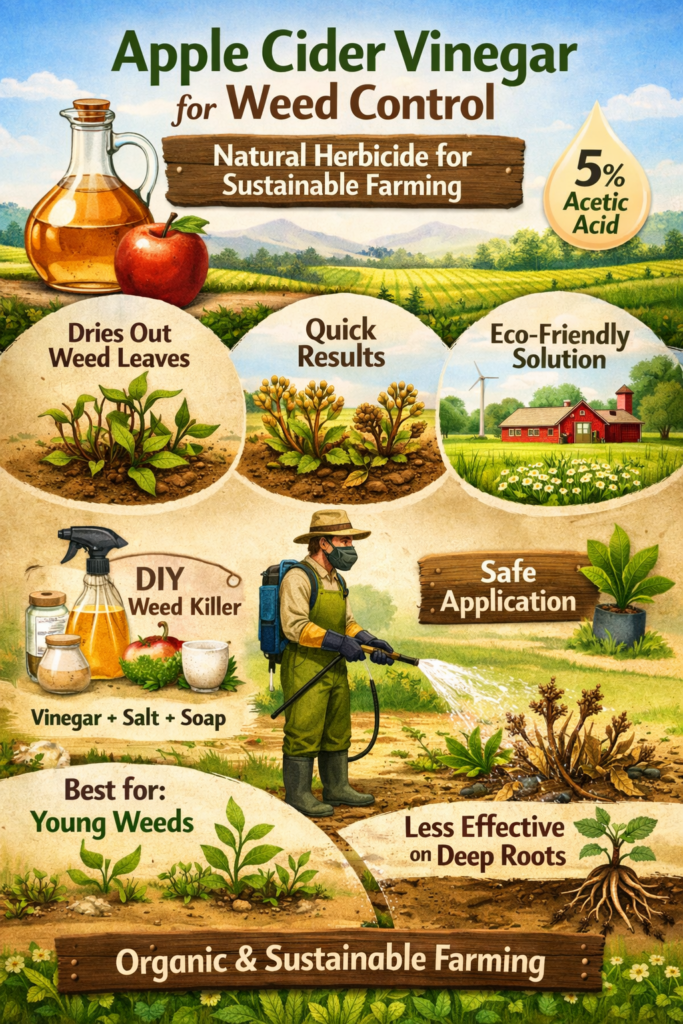
Apple Cider Vinegar: A Simple, Farm-Friendly Weed Control Option
Apple cider vinegar is emerging as a practical and natural solution for weed control, especially for farmers and gardeners who want to reduce synthetic chemical use while maintaining clean fields, bunds, and garden beds.
What Makes Apple Cider Vinegar Work as a Herbicide
Apple cider vinegar is produced by fermenting crushed apples into alcohol and then converting that alcohol into acetic acid using beneficial bacteria. The result is a sharp, sour liquid containing acetic acid — the key ingredient responsible for its weed-killing properties.
Household vinegar typically contains about 5% acetic acid, which can burn and dry out soft weed foliage. Stronger horticultural formulations may contain 20–30% acetic acid, delivering a much more aggressive effect on plant tissues.
The herbicidal action occurs when acetic acid draws moisture from exposed plant tissues, rapidly dehydrating and damaging the leaves and stems it touches. Because it works only on the parts it contacts, vinegar acts as a contact herbicide, not a systemic one that travels to the roots.
How to Use It for Weed Control
For small farms, orchards, gardens, or pathways:
-
Use undiluted vinegar (minimum 5% acetic acid).
-
Spray directly onto weed leaves.
-
Apply during bright, sunny weather for faster drying and better results.
Common Homemade Spray Mix
Many users prepare a simple solution:
-
1 gallon vinegar
-
1 cup salt
-
1 tablespoon liquid dish soap
Salt intensifies tissue burn, while soap helps the solution stick evenly to the leaves.
Where to Apply
Target areas such as:
-
cracks in pavements
-
farm bunds
-
pathways
-
non-crop zones
Avoid spraying near crop plants, as the solution damages any tender vegetation it touches.
Effectiveness and Limitations
Apple cider vinegar works best on:
✔ young weeds (less than 2 weeks old)
✔ soft, tender foliage
✔ small annual weeds
Visible wilting and browning can appear within hours.
Limitations
-
Less effective on deep-rooted or perennial weeds
-
Does not kill underground roots or rhizomes
-
Regrowth may occur
For long-term control, combine with:
-
mulching
-
hand weeding
-
mechanical cultivation
-
repeated spot treatment
Safety and Environmental Considerations
Although household vinegar is familiar and safe for kitchen use, stronger acetic acid solutions can be corrosive.
Safety precautions:
-
wear gloves and eye protection
-
avoid skin contact
-
use long sleeves
-
store safely away from children and livestock
Heavy spraying may temporarily alter soil pH and affect beneficial organisms, so spot application and testing on a small area is recommended.
Avoid spraying on windy days to prevent drift onto crops, lawns, or ornamental plants.
Role in Sustainable Farming
In apple-producing regions, vinegar can be made from apple processing byproducts, turning waste into a value-added farm input and supporting a circular farm economy.
For organic and low-chemical systems, apple cider vinegar fits well into integrated weed management, alongside:
-
crop rotation
-
mulching
-
mechanical weeding
-
field monitoring and record keeping
Final Thoughts
While not as strong or long-lasting as synthetic herbicides, apple cider vinegar offers:
✔ quick action on young weeds
✔ minimal residue
✔ eco-friendly weed control
✔ compatibility with organic farming
For farmers and gardeners seeking natural solutions, it provides a simple and effective tool when used correctly and combined with other weed-management practices.