Soil Management for Crop Production: The Foundation of Profitable Farming
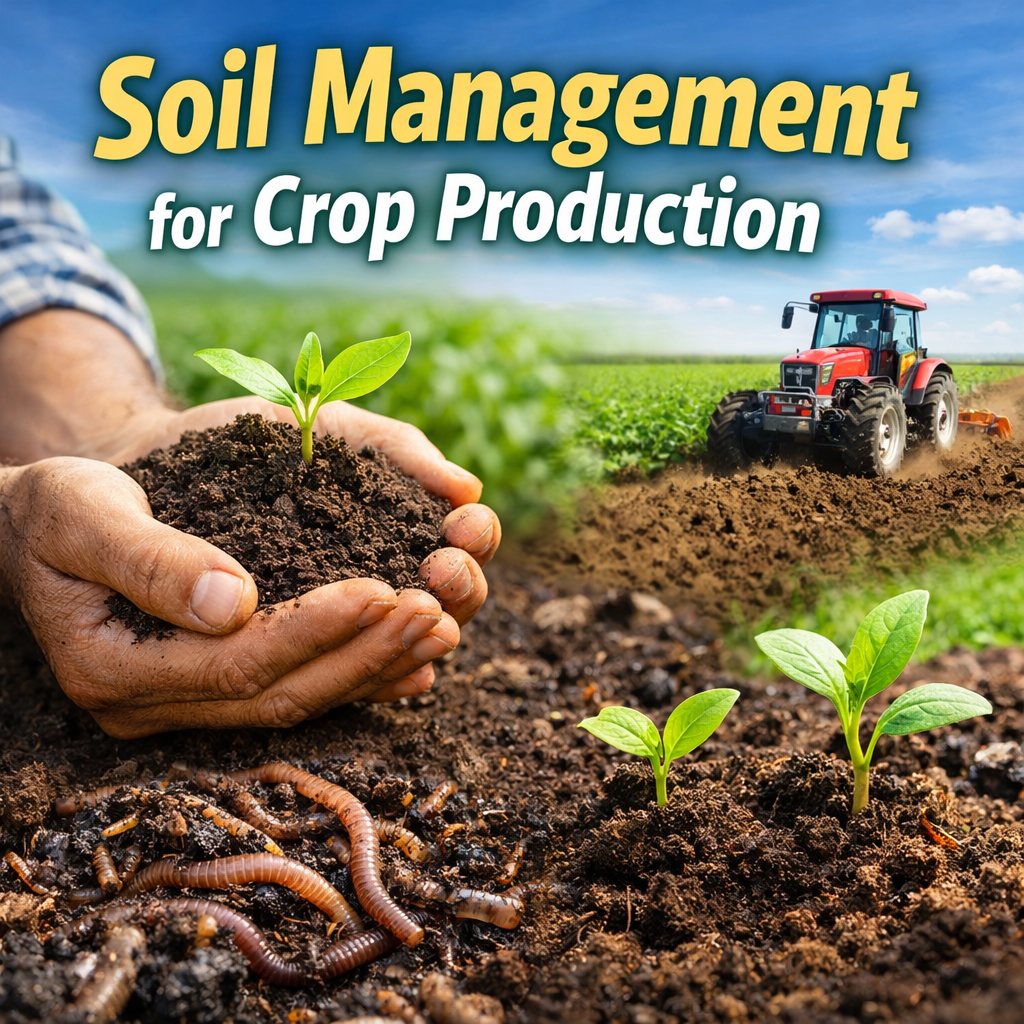
Soil Management for Crop Production: The Foundation of Profitable Farming
Introduction
Healthy soil is the backbone of successful agriculture. It provides plants with water, nutrients, and oxygen while supporting strong root development. When soil is managed properly, farmers can achieve higher yields, reduce input costs, and protect their land for future generations.
In today’s changing climate, good soil management is not just beneficial — it is essential for sustainable and profitable farming.
What is Soil Management?
Soil management refers to the planned practices used to maintain and improve soil health before, during, and after crop production.
It involves:
-
preparing soil for planting
-
maintaining fertility
-
managing water efficiently
-
preventing erosion and compaction
-
preserving soil life and organic matter
A healthy soil system supports long-term productivity and environmental sustainability.
Understanding Soil Health
Soil health depends on three key components:
1. Physical Health
This includes soil structure, aeration, and water-holding capacity. Well-structured soil allows roots to grow easily and improves water infiltration.
2. Chemical Health
This relates to soil pH, nutrient availability, and salinity levels. Balanced nutrients ensure proper plant growth and prevent deficiencies.
3. Biological Health
Living organisms such as microbes, earthworms, and beneficial fungi break down organic matter and release nutrients that plants can absorb.
Essential Soil Management Practices
1. Proper Tillage and Seedbed Preparation
Tillage helps loosen compact soil, remove weeds, and create a fine seedbed for uniform germination. However, excessive tillage can damage soil structure. Conservation or minimum tillage helps retain moisture and reduce erosion.
2. Crop Rotation and Diversification
Growing the same crop repeatedly can reduce soil fertility and increase pest problems. Rotating crops such as cereals, pulses, and oilseeds improves nutrient balance and soil structure. Including legumes naturally adds nitrogen to the soil.
3. Adding Organic Matter
Applying farmyard manure, compost, green manure, and crop residues improves soil fertility and structure. Organic matter increases water retention and supports beneficial soil organisms.
4. Balanced Fertilizer Use
Soil testing helps determine nutrient requirements. Applying the right amount of nitrogen, phosphorus, potassium, and micronutrients prevents deficiencies and avoids environmental pollution.
5. Efficient Water and Drainage Management
Overwatering causes waterlogging and root diseases, while insufficient watering stresses crops. Proper irrigation scheduling, drip irrigation, and field leveling improve water use efficiency. Good drainage prevents soil structure damage.
6. Preventing Soil Erosion and Compaction
Keeping soil covered with crop residues or cover crops protects it from erosion. Avoid using heavy machinery on wet soil to prevent compaction, which restricts root growth and water movement.
Benefits of Good Soil Management
Proper soil care offers multiple advantages:
-
improves water retention and drought resistance
-
enhances nutrient availability
-
increases crop yields and quality
-
reduces pest and disease incidence
-
lowers fertilizer and irrigation costs
-
supports sustainable farming practices
Healthy soil also supports beneficial microbes that strengthen plant resistance to stress and diseases.
Soil Management for Future Sustainability
With increasing climate variability and rising input costs, farmers must focus on soil health to ensure long-term productivity. Investing in soil management today leads to improved profitability, environmental protection, and resilient farming systems.
Conclusion
Soil is more than just a growing medium — it is a living ecosystem that determines farm productivity. By adopting proper soil management practices, farmers can build fertile, resilient soils that support high yields and sustainable agriculture for generations to come.