Pollinators in Agriculture: The Invisible Workforce Behind Crop Yields
Pollinators in Agriculture: The Invisible Workforce Behind Crop Yields
Pollinators are the invisible workforce of agriculture, quietly sustaining crop production and farm incomes across the world. Their role in transferring pollen between flowers enables fertilization, seed formation, and fruit development — processes essential for food production and farm profitability.
Introduction
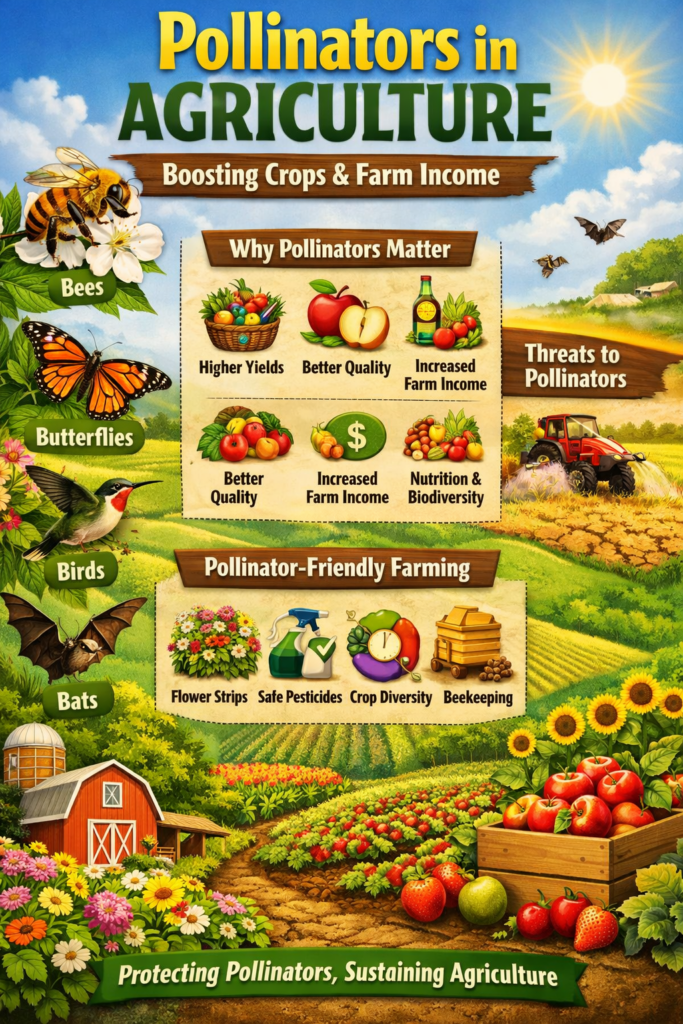
Pollinators include bees, butterflies, birds, bats, and numerous beneficial insects. By carrying pollen from the male part of a flower to the female part, they trigger fertilization and allow crops to produce fruits and seeds.
Without this natural service, yields of fruits, vegetables, oilseeds, nuts, and seed crops would decline sharply, affecting food supply, market availability, and farmer income.
How Pollinators Support Crop Production
Pollinators play a vital role in the reproduction of a large share of flowering plants, including many cultivated crops essential for human nutrition.
Their activity improves:
-
Fruit and seed set
-
Seed number and weight
-
Size uniformity and shape
-
Shelf life and storage quality
-
Oil content in oilseed crops
-
Flavor and market appeal
Well-pollinated crops also show fewer deformities and reduced disease susceptibility.
In horticulture, pollinators are crucial for high-value crops such as:
-
Apples
-
Berries
-
Melons
-
Tomatoes
-
Oilseeds
-
Vegetable crops
In India, pollinators support both Kharif and Rabi crops, including mustard, peas, and winter vegetables, where insect activity significantly improves seed setting and yield.
Nutritional and Economic Value
Pollination services provide immense ecological and economic value. Globally, pollinators contribute hundreds of billions of dollars to crop production annually.
They support the production of nutrient-rich foods such as:
-
Fruits
-
Nuts
-
Oilseeds
-
Vegetables
These foods supply essential vitamins, minerals, antioxidants, and healthy fats — making pollinator protection vital for human nutrition and dietary diversity.
For farmers, effective pollination means:
✔ Higher yield per acre
✔ Better quality produce
✔ Improved market prices
✔ Increased income without extra input costs
This makes pollinators natural partners in improving farm profitability, especially where land and water resources are limited.
Threats to Pollinator Populations
Despite their importance, pollinator populations are declining due to modern agricultural and environmental pressures.
Major threats include:
Habitat Loss
Removal of hedgerows, wild vegetation, and flowering borders reduces food and nesting sites.
Pesticide Misuse
Indiscriminate chemical use can harm beneficial insects and weaken colonies.
Monocropping
Single-crop systems lack continuous flowering, causing food shortages for pollinators.
Climate Change
Shifts in weather patterns and flowering times disrupt pollination cycles.
These factors increase the risk of pollination gaps and reduced crop productivity.
Farm Practices to Protect and Enhance Pollinators
Farmers can actively support pollinators through simple, practical steps:
Create Pollinator Habitats
-
Plant flowering borders and hedgerows
-
Maintain native vegetation patches
-
Preserve natural nesting areas
Use Pesticides Responsibly
-
Spray only when necessary
-
Choose pollinator-safe products
-
Spray during early morning or late evening
Increase Crop Diversity
-
Practice crop rotation and intercropping
-
Include flowering legumes and cover crops
-
Ensure continuous blooming periods
Promote Beekeeping
-
Introduce managed honeybee colonies
-
Support local beekeeping initiatives
-
Generate additional income from honey and wax
These practices not only support pollinators but also improve biodiversity, soil health, and long-term farm resilience.
Conclusion
Pollinators are essential to sustainable agriculture, linking ecosystem health with farm productivity and livelihoods. Protecting these beneficial species through pollinator-friendly farming practices is a cost-effective way to secure yields, improve crop quality, and strengthen resilience against climate and market risks.
Supporting pollinators today ensures a more productive, nutritious, and sustainable agricultural future.