Permaculture Farming: Sustainable Agriculture Inspired by Nature
Permaculture Farming: Sustainable Agriculture Inspired by Nature
Introduction
Permaculture is a sustainable farming and land-management system that designs farms and gardens to function like natural ecosystems. Instead of relying heavily on chemical inputs or intensive soil disturbance, permaculture focuses on creating balanced systems that remain productive for many years while protecting soil, water, and biodiversity.
The concept blends ideas from organic farming, agroforestry, rainwater harvesting, composting, and ecological design. The goal is to build self-sustaining agricultural systems that improve soil fertility and resilience over time.
Why Permaculture Developed
Modern industrial agriculture often depends on monocropping, chemical fertilizers, pesticides, and frequent soil tillage. While these methods can increase short-term yields, they may gradually reduce soil organic matter and natural fertility.
Over time, this can cause problems such as:
-
Soil nutrient depletion
-
Increased salinity
-
Soil erosion
-
Higher dependency on expensive external inputs
Permaculture emerged as an alternative approach that allows farmers to maintain productivity while protecting the ecological health of the land.
Core Ethics of Permaculture
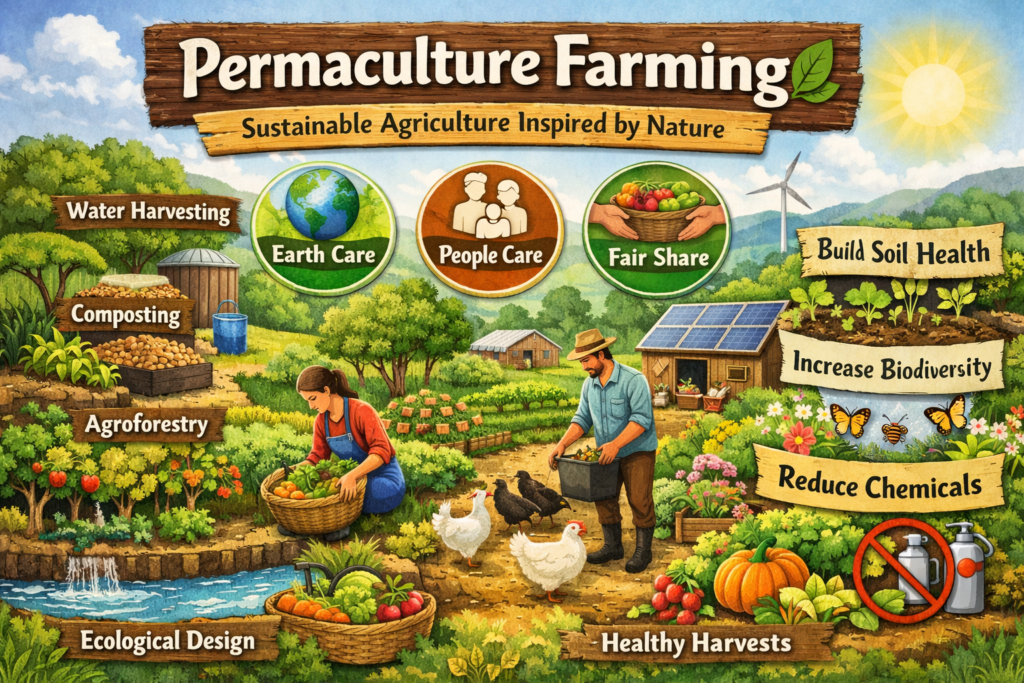
Permaculture is based on three key ethical principles that guide every design decision.
1. Earth Care
Protecting and improving natural resources such as soil, water, air, and biodiversity is the foundation of permaculture systems.
2. People Care
Permaculture aims to create systems that provide nutritious food, healthy living environments, and sustainable livelihoods for communities.
3. Fair Share
Resources should be used responsibly. Surplus production and benefits should be shared in ways that support both communities and ecosystems.
These ethics encourage farmers to treat the farm as a living ecosystem where plants, animals, microorganisms, and people work together.
Key Permaculture Principles in Practice
Observe and Interact
Farmers first study their land carefully—observing climate patterns, water movement, soil conditions, and existing vegetation before making design decisions.
Catch and Store Energy
Natural resources like rainwater, sunlight, and organic matter are captured and stored so they can be used during dry or difficult periods.
Obtain a Yield
Every component of the farm should produce something useful—such as food, fodder, fuel, or habitat for beneficial organisms.
Apply Self-Regulation
Farmers regularly evaluate their practices and adjust them to improve system balance and productivity.
Use Renewable Resources
Permaculture encourages the use of locally available inputs like compost, green manure, and biological pest control instead of synthetic chemicals.
Produce No Waste
All outputs are treated as resources. Crop residues become mulch, animal manure becomes fertilizer, and greywater can be used for irrigation.
Integrate Rather Than Separate
Plants, animals, and farm structures are arranged so they support each other—for example, chickens controlling pests in orchards.
Value Diversity
Growing multiple crops and species helps reduce risks from pests, diseases, and climate variability.
Modern Technology Supporting Permaculture
Digital farm management tools are helping farmers implement sustainable practices more effectively. Platforms such as AGRIVI allow farmers to monitor field conditions, track inputs, and plan operations more precisely.
These tools can help farmers:
-
Reduce pesticide use
-
Optimize fertilizer application
-
Monitor weather risks
-
Track pest and disease outbreaks
Research shows that improved farm management can reduce pesticide usage by around 21% and fertilizer use by about 23%, while also lowering greenhouse gas emissions.
Conclusion
Permaculture provides a practical framework for building farms that work with nature rather than against it. By applying ecological design principles, farmers can create resilient agricultural systems that protect natural resources while remaining productive and profitable.
As climate challenges increase, permaculture offers a powerful approach for sustainable farming and long-term food security.