Managing Farm Risk with Smart Software | Smart Farming Guide 2026
Managing Farm Risk with Smart Software | Smart Farming Guide 2026
Farming has always depended on nature, but today’s farmers face even greater uncertainty due to changing climate patterns, unpredictable weather, and rising pest and disease pressure. Sudden heatwaves, heavy rainfall, or prolonged dry spells can damage crops at any stage of growth. At the same time, pests and diseases thrive in these shifting conditions, leading to significant yield losses—estimated globally at around 20–40% each year.
For farmers, this uncertainty translates into real financial risk. Lower yields, reduced crop quality, and unexpected input costs can directly affect income. Traditional methods of observation and experience are still valuable, but they are often not enough to respond quickly to modern challenges.
The Shift Toward Smart Farming
To manage these risks effectively, farmers are increasingly adopting digital solutions. Farm management software is emerging as a powerful tool that transforms farming from intuition-based decisions to data-driven strategies.
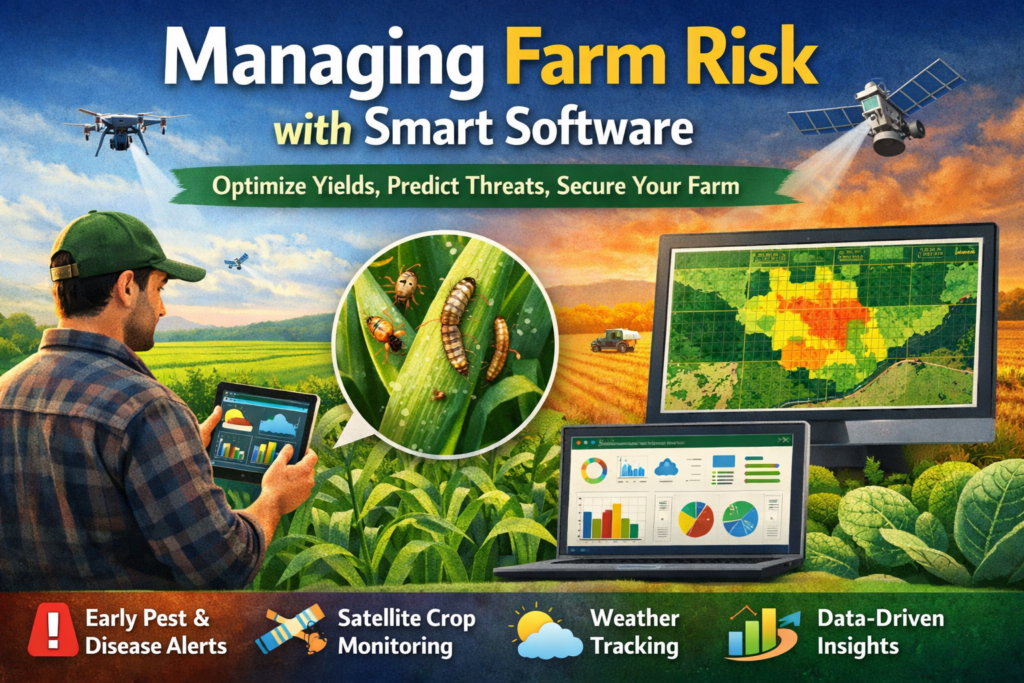
Platforms like AGRIVI and similar tools provide farmers with real-time insights into their fields. These systems combine multiple technologies such as:
- Weather monitoring at the field level
- Pest and disease prediction models
- Satellite-based crop health tracking
- Digital farm records and activity logs
This integrated approach allows farmers to understand exactly what is happening in their fields and respond proactively rather than reactively.
Early Warnings, Better Decisions
One of the biggest advantages of farm management software is early risk detection. Instead of discovering a pest infestation after damage is done, farmers receive alerts in advance.
For example:
- Pest risk alerts notify farmers before outbreaks occur
- Disease prediction models suggest preventive measures
- Weather-based warnings help plan irrigation and spraying
These early warnings give farmers enough time to take action at the right moment, reducing crop damage and saving costs on unnecessary treatments.
Data That Drives Profitability
Beyond risk management, smart software helps farmers improve overall productivity. By analyzing past and present data, these platforms highlight:
- Which crops or varieties perform best
- Which fields are most productive
- Where input costs can be reduced
- Optimal planting and harvesting times
With this information, farmers can fine-tune their operations to achieve better yields and higher quality produce while controlling expenses.
Building Resilient Farms for the Future
Digital farm management is not just about technology—it’s about sustainability and long-term success. As climate change and market pressures continue to grow, farmers need tools that help them adapt quickly and efficiently.
By using smart software, farmers can:
- Reduce yield losses
- Improve decision-making
- Optimize resource use
- Increase profitability
In the long run, this leads to more resilient farming systems that can withstand uncertainty and deliver consistent results.
Conclusion
Modern agriculture is evolving rapidly, and risk management is becoming more important than ever. Farm management software offers a practical and effective solution by turning data into actionable insights.
For farmers looking to secure their yields, reduce risks, and improve profitability, adopting smart farming technology is no longer optional—it is essential for staying competitive in today’s agricultural landscape.