
Spring Crop Protection Planning: First Spray Strategy Guide
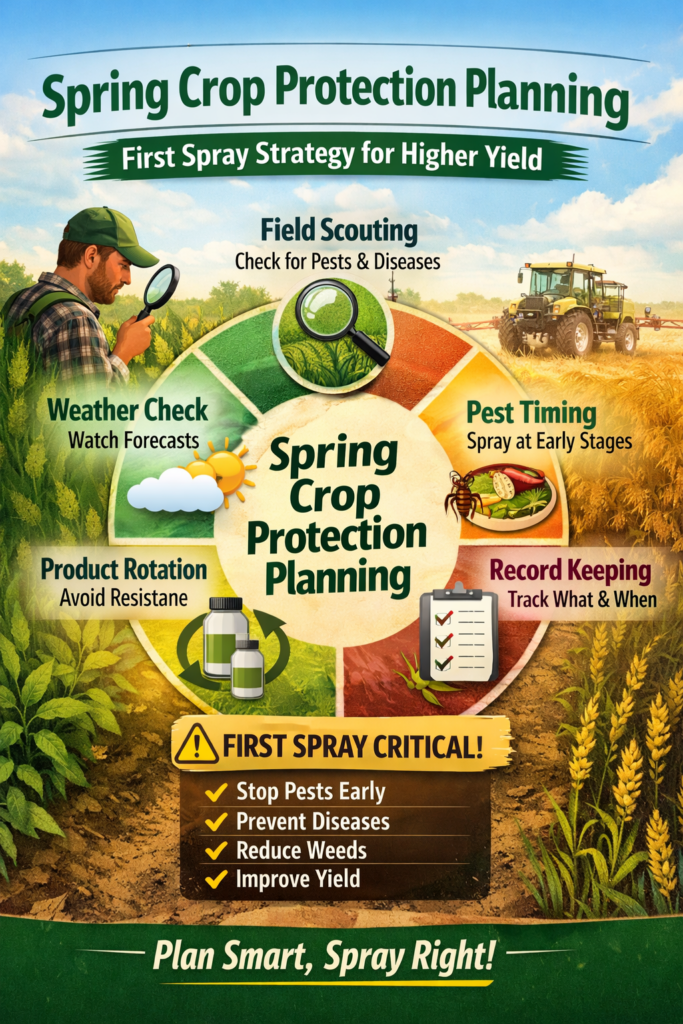
Spring Crop Protection Planning: First Spray Strategy Guide
Spring crop protection planning is one of the most critical decisions a farmer makes at the start of the season. It focuses on identifying the right timing and strategy for the first spray, which sets the foundation for the entire crop cycle.
If this first spray window is used correctly, farmers can prevent pest and disease outbreaks early. But if missed, crop management becomes reactive, increasing costs and reducing yield potential.
1. Field Scouting – The First Step
Regular field scouting helps you understand:
- Early pest presence
- Disease symptoms
- Weed emergence
Scouting ensures that sprays are applied only when needed and at the right stage, instead of blindly spraying. Experts emphasize that pest populations vary from field to field, making scouting essential for accurate decisions.
2. Weather-Based Spray Planning
Weather plays a huge role in spray effectiveness. Key points:
- Spray during early morning or late evening
- Avoid strong winds and rainfall
- Maintain moderate temperature and humidity
Wrong weather conditions can reduce effectiveness due to evaporation, drift, or wash-off.
3. Timing Based on Pest Lifecycle
The best results come when spraying:
- At early pest stages (larvae, newly hatched insects)
- Before severe damage appears
Applying sprays at the correct lifecycle stage increases efficiency and reduces the need for repeated applications.
4. Product Selection & Rotation Strategy
A proper spray plan includes:
- Using different modes of action
- Avoiding repeated use of the same chemical
- Preventing pesticide resistance
A program-based approach (pre + post sprays) helps maintain long-term effectiveness and better crop protection.
5. Record Keeping & Planning
Always maintain records of:
- What was sprayed
- When it was sprayed
- Which field was treated
This helps in:
- Better planning next sprays
- Avoiding overuse of chemicals
- Improving long-term farm decisions
Why the First Spray is Critical
- Protects crops during early growth stage
- Reduces early competition from weeds
- Prevents pest population buildup
- Improves final yield and quality
Poor timing can lead to higher input costs and yield loss, as delayed spraying reduces effectiveness.
Conclusion
Spring crop protection is not just about spraying — it’s about smart planning.
A successful first spray depends on:
✔ Field scouting
✔ Weather monitoring
✔ Pest lifecycle understanding
✔ Proper chemical rotation
✔ Accurate record keeping
Getting this right means your crop stays healthy, protected, and profitable throughout the season.