
Humus in Soil: Importance, Benefits and How Farmers Can Protect It
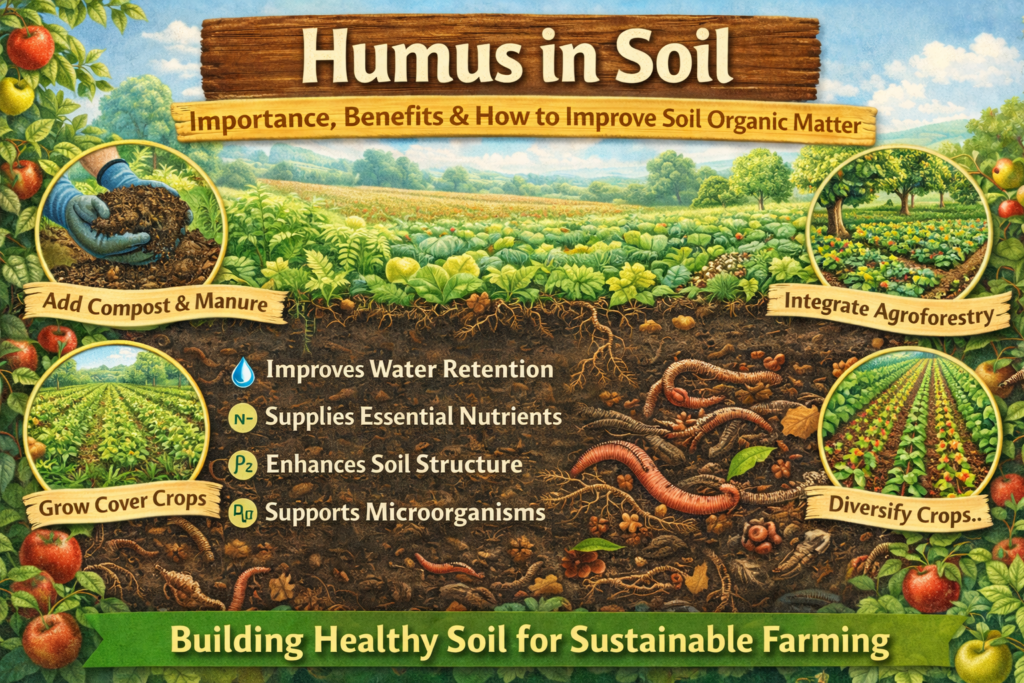
Humus in Soil: Importance, Benefits and How Farmers Can Protect It
Introduction
Humus is one of the most important components of healthy soil. It is the stable organic matter formed after the complete decomposition of plant and animal residues. Unlike fresh organic material, humus can remain in the soil for hundreds of years and plays a vital role in maintaining soil fertility.
However, intensive farming practices such as frequent tillage and heavy use of chemical inputs can speed up the breakdown of humus. If organic matter is not returned to the soil regularly, this can lead to long-term soil degradation and declining productivity.
What is Humus and How It Forms
Humus forms through a natural biological process called humification. During this process, soil microorganisms break down organic residues such as crop remains, leaves, manure, and plant roots.
These residues gradually transform into dark, stable carbon-rich compounds that improve soil structure and fertility.
Typical characteristics of humus-rich soil include:
-
Dark brown or black soil color
-
Loose and crumbly texture
-
High biological activity
-
Better soil warmth during early spring
These characteristics create favorable conditions for crop growth.
Key Benefits of Humus in Soil
Humus provides several important benefits that improve both soil health and crop productivity.
1. Improves Water Retention
Humus acts like a natural sponge and can hold up to 90% of its weight in water. This helps soils retain moisture and reduces irrigation requirements during dry periods.
2. Stores and Supplies Nutrients
Humus binds essential plant nutrients such as:
-
Nitrogen
-
Phosphorus
-
Calcium
These nutrients are released slowly, ensuring a continuous supply for crops and reducing nutrient loss through leaching.
3. Improves Soil Structure
Humus improves soil aggregation and creates a crumb structure up to about 30 cm soil depth. This improves root penetration, aeration, and water infiltration.
4. Supports Soil Microorganisms
Humus-rich soils provide a healthy environment for beneficial microorganisms such as:
-
Mycorrhizal fungi
-
Nitrogen-fixing bacteria
-
Phosphate-solubilizing microbes
These organisms play a key role in improving plant nutrition and soil fertility.
How Intensive Farming Reduces Humus
Many modern agricultural practices can accelerate the breakdown of humus.
These include:
-
Frequent deep tillage
-
Continuous monocropping
-
Heavy use of mineral fertilizers without organic inputs
When humus levels decline, soil begins to lose important properties such as:
-
Soil structure
-
Water-holding capacity
-
Biological activity
As a result, crops become more vulnerable to drought, nutrient stress, and soil erosion.
Over time, farmers may need to use more fertilizers and irrigation just to maintain yields, increasing production costs.
Strategies to Protect and Rebuild Humus
Farmers can protect soil humus by adopting sustainable soil management practices.
Apply Organic Manure and Compost
Regular use of farmyard manure, compost, and organic fertilizers adds valuable organic matter back into the soil.
Use Green Manures and Cover Crops
Growing crops such as legumes and cover crops helps add biomass to the soil and improves organic matter levels.
Practice Crop Rotation
Rotating different crops prevents soil exhaustion and improves soil biological diversity.
Reduce Tillage
Minimizing soil disturbance helps preserve soil structure and slows down humus decomposition.
Integrate Agroforestry
Planting trees or shrubs on farms adds organic residues, improves biodiversity, and supports long-term soil fertility.
Conclusion
Humus plays a crucial role in maintaining soil health, water retention, nutrient availability, and overall crop productivity. While intensive farming can reduce humus levels over time, farmers can rebuild and protect this valuable resource through sustainable soil management practices.
By increasing organic matter inputs, reducing soil disturbance, and adopting diversified cropping systems, farmers can maintain fertile soils and ensure long-term agricultural productivity.