Importance of Pollinators in Agriculture: Key to Higher Crop Yields and Food Security
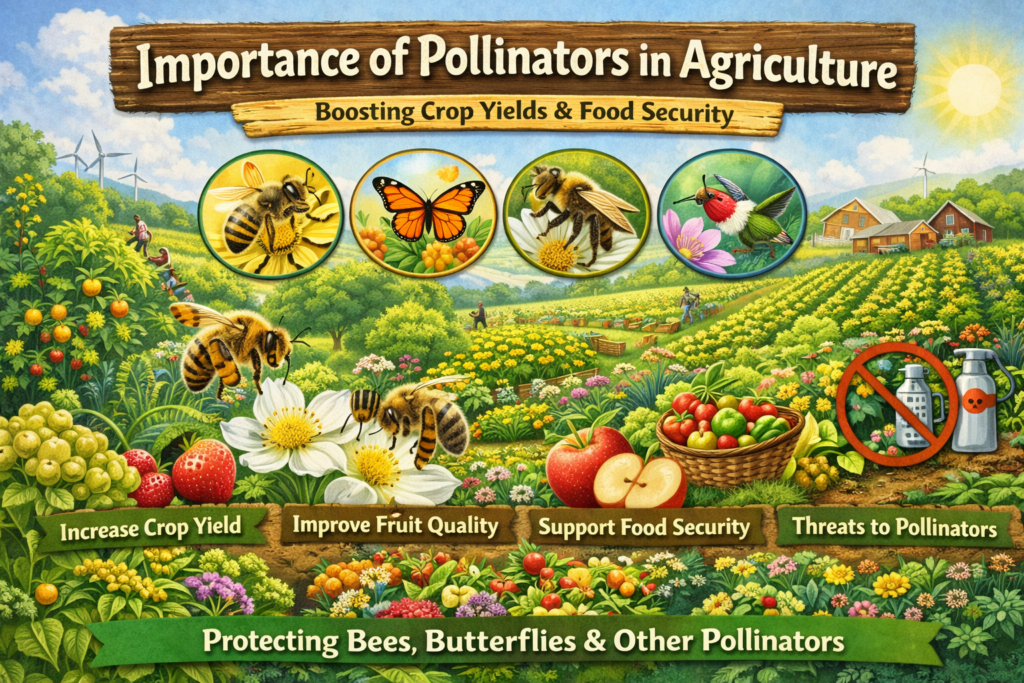
Importance of Pollinators in Agriculture: Key to Higher Crop Yields and Food Security
Introduction
Pollinators play a crucial role in modern agriculture. These organisms transfer pollen from one flower to another, enabling fertilization and the development of fruits and seeds. Without pollinators, many of the crops that humans rely on for food would produce lower yields or fail to reproduce altogether.
In addition to supporting crop production, pollinators also contribute to farm income, biodiversity, and global food security. Protecting these natural helpers is therefore essential for sustainable agriculture.
What Are Pollinators?
Pollinators are animals that help plants reproduce by transferring pollen between flowers. The most common pollinators include:
-
Bees
-
Butterflies
-
Wasps
-
Flies
-
Beetles
-
Bats
-
Hummingbirds
Among these, bees are the most efficient pollinators, especially for many fruit and vegetable crops.
Role of Pollinators in Crop Production
Pollinators support the reproduction of many important crops grown for food, livestock feed, and raw materials. When pollinators move between flowers collecting nectar or pollen, they transfer pollen grains that enable plants to produce seeds and fruits.
Pollinators are essential for many agricultural crops, including:
-
Fruit crops such as apples, mangoes, strawberries, and almonds
-
Vegetable crops like cucumbers, pumpkins, and tomatoes
-
Oilseed crops such as rapeseed and sunflower
-
Forage crops like clover and alfalfa used for livestock feed
Without proper pollination, these crops may produce fewer fruits, poor-quality produce, or lower seed production.
Impact on Yield and Crop Quality
Pollinators influence approximately 35% of global crop production and benefit more than 87 major food crops worldwide. Effective pollination can significantly improve both yield and crop quality.
For example:
-
Apples develop better size and shape when properly pollinated
-
Oilseed crops produce higher oil content with efficient pollination
-
Strawberries and other fruits become more uniform and marketable
This means pollinators not only increase the quantity of production but also improve the quality and market value of agricultural products.
Wild vs Managed Pollinators
Pollinators can be categorized into two main groups: wild pollinators and managed pollinators.
Wild Pollinators
Wild pollinators include insects like solitary bees, bumblebees, hoverflies, butterflies, and beetles. These species naturally live in ecosystems surrounding farms and often perform pollination very efficiently.
Managed Pollinators
Managed pollinators are those that farmers intentionally introduce to fields. The most common example is honeybee colonies used for pollinating crops such as almonds, fruits, and vegetables.
While honeybees are widely used in agriculture, wild pollinators can sometimes be even more efficient depending on the crop.
Major Threats to Pollinators
Pollinator populations around the world are declining due to several environmental and agricultural factors.
The main threats include:
-
Habitat loss due to land-use changes
-
Expansion of intensive farming systems
-
Excessive use of pesticides and agrochemicals
-
Climate change and extreme weather events
-
Spread of pests and diseases affecting pollinator species
A decline in pollinator populations can lead to reduced crop yields, unstable food supplies, and economic losses for farmers.
Farming Practices That Support Pollinators
Farmers can adopt several practical strategies to protect and encourage pollinator populations on their farms.
Create Flower-Rich Field Margins
Planting flowering plants along field edges provides nectar and pollen for pollinators throughout the season.
Reduce Pesticide Use
Careful pesticide management and avoiding spraying during flowering periods helps protect pollinators.
Grow Diverse Crops
Crop rotation and planting different flowering crops such as pulses, oilseeds, and clover ensure continuous food sources for pollinators.
Protect Natural Habitats
Maintaining hedgerows, grasslands, and natural vegetation provides nesting sites and safe habitats for wild pollinators.
Use Managed Pollinators When Needed
Introducing honeybee or bumblebee colonies can help ensure reliable pollination for high-value crops.
Conclusion
Pollinators are essential partners in agriculture and play a major role in maintaining food production and ecosystem health. By improving crop yields, enhancing product quality, and supporting biodiversity, they contribute directly to sustainable farming systems.
Protecting pollinators through responsible farming practices and habitat conservation will help ensure resilient agricultural systems and long-term food security for future generations.