
Lavender Harvesting Guide: Best Time, Techniques, and Quality Tips
Lavender harvesting is one of the most rewarding moments in herb cultivation. Fields turn a deep, calming purple, the air fills with fragrance, and months of careful growing finally translate into usable, market-ready produce. Beyond beauty, however, harvesting lavender at the right time and in the right way directly determines product quality, yield, and profitability.
Whether you grow lavender for fresh bouquets, dried buds, or essential oil, understanding bloom stages, weather conditions, and harvest techniques will help you get the best results season after season.
Understanding Lavender Bloom and Harvest Season
Lavender does not bloom uniformly across all regions. Flowering time varies with climate, altitude, rainfall patterns, and the variety planted. In many temperate and Mediterranean-type regions, harvesting begins in late spring, continues through summer, and may extend into early autumn if conditions remain warm and dry.
This long flowering window is an advantage. It allows growers to plan staggered harvests depending on their end product. Some plants may be cut early for decorative bundles, while others are left longer for buds or oil extraction.
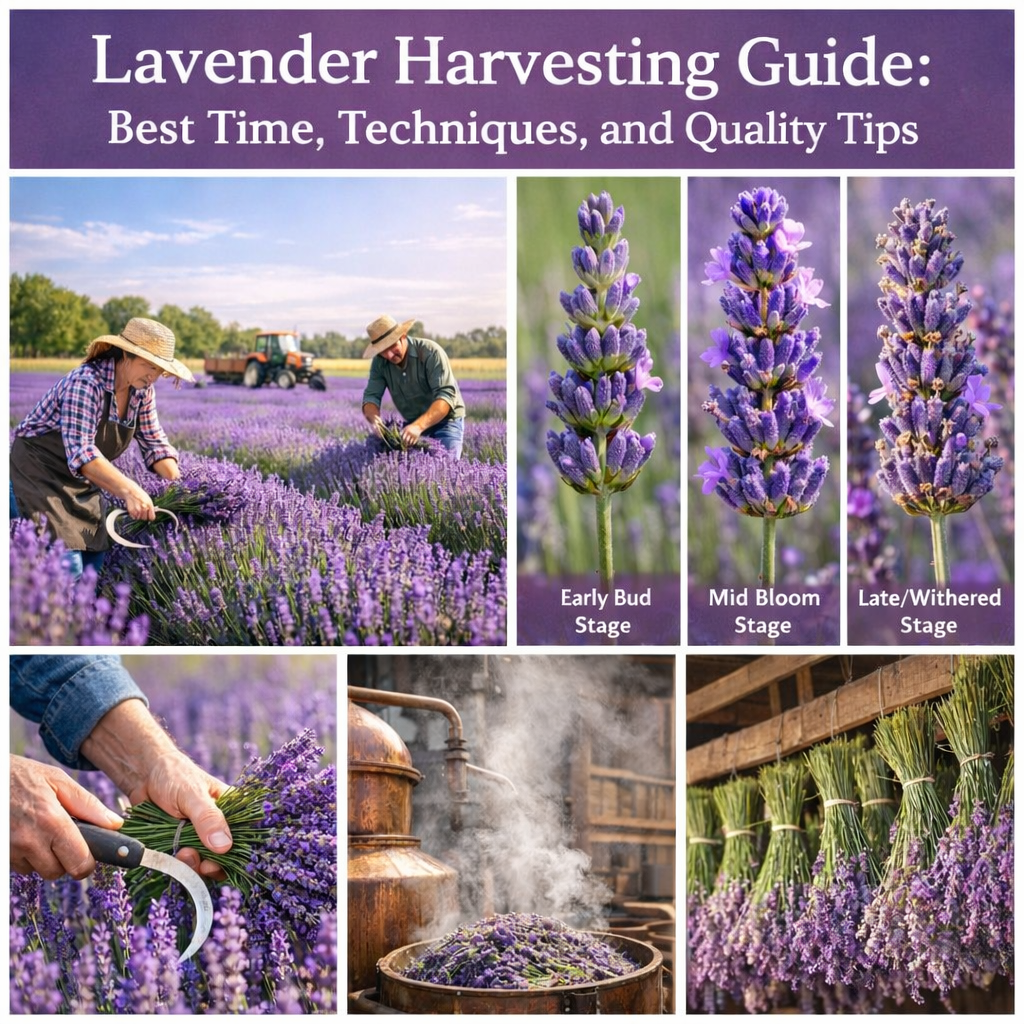
More important than calendar dates is flower development on each stem. Lavender flowers open gradually from the bottom of the spike upward. Observing how many individual florets have opened gives a far more accurate signal of harvest readiness than color alone.
Choosing the Right Harvest Stage for Each Product
Lavender quality is defined by aroma, appearance, and oil content. Each end use requires a different harvest stage.
1. Fresh or Dried Bundles
For bouquets and decorative bunches, timing is all about appearance.
-
Harvest when only the first one or two florets on each stem have opened.
-
Flower spikes remain tight and well-shaped.
-
Bud loss during drying is minimal.
-
Bundles keep their visual appeal for longer periods.
This stage is ideal for florists, gift markets, and on-farm sales.
2. Dried Lavender Buds
If your goal is loose buds for sachets, culinary use, or crafts, wait a little longer.
-
Harvest when 25–50% of the florets on a stem are open.
-
Buds are fuller, heavier, and more aromatic.
-
Flowers separate easily from stems after drying.
This balance ensures strong fragrance without excessive shattering or color loss.
3. Essential Oil Production
For distillation, oil content matters more than looks.
-
The best stage is when about half of the flowers on the stem have withered.
-
Essential oil concentration is usually at its peak.
-
The aroma profile is richer and more stable.
Although flowers may look past their prime visually, they often deliver the highest oil yield at this stage.
Best Time of Day and Weather Conditions
Lavender must be harvested completely dry. Moisture is the enemy of both color and fragrance.
Avoid harvesting when:
-
Dew is still present
-
Plants are wet from rain or irrigation
-
Temperatures are extremely high
Wet flowers are prone to mold during drying, discoloration in bundles, and chemical changes that reduce oil quality.
Ideal harvest window:
-
Mid-morning to early afternoon
-
Dew has evaporated
-
Heat stress has not yet peaked
During this period, flowers are firm, easy to handle, and rich in volatile oils.
Harvesting Methods: Small Scale to Commercial Fields
The scale of your operation determines how lavender is harvested, but the goal is always the same: clean cuts, gentle handling, and quick processing.
Hand Harvesting (Small Gardens & Boutique Farms)
-
Done using hand pruners or curved, serrated sickles
-
Several stems are gathered and cut in one smooth motion
-
Allows excellent control over stem length and quality
-
Ideal for fresh bundles and premium dried products
Hand harvesting is slower but offers superior selectivity and presentation.
Mechanical Harvesting (Large Commercial Farms)
-
Specialized harvesters move through rows
-
Stems are cut and conveyed directly into trailers
-
Enables fast harvesting at peak bloom
-
Reduces labor costs and time pressure
This method is essential for large essential-oil operations where timing and volume are critical.
Post-Harvest Handling and Drying
Harvesting does not end in the field. What happens next determines final quality.
For Bundles:
-
Tie small, loose bunches to allow airflow
-
Hang upside down in a dark, dry, well-ventilated area
-
Avoid direct sunlight to preserve color and scent
For Buds:
-
Dry stems fully before stripping
-
Store buds in airtight containers
-
Keep away from heat, light, and moisture
For Oil:
-
Transport flowers quickly to the distillery
-
Distill as soon as possible after harvest
-
Delays can reduce oil yield and alter aroma
Using Digital Tools to Track Lavender Harvests
Modern lavender farming blends tradition with technology. Digital farm management tools help growers monitor every stage of production.
By recording:
-
Harvest dates and bloom stages
-
Labor hours and worker efficiency
-
Yield per field or variety
-
Fuel and machinery usage
Farmers gain clear insight into real production costs and performance trends. Over time, this data helps fine-tune harvest timing, reduce waste, and improve profitability—without losing the craft and beauty that make lavender special.
Final Thoughts
Lavender harvesting is both an art and a science. The beauty of purple fields and soothing fragrance may draw people in, but success depends on careful observation, precise timing, and respectful handling of the crop.
By matching harvest stage to your end product, choosing the right time of day, and using suitable harvesting methods, you can consistently produce high-quality lavender—whether for bouquets, buds, or essential oil. With thoughtful planning and modern record-keeping, lavender can be not only a joy to grow but also a reliable and profitable crop