Farmers as Stewards of the Land: Protecting Nature While Feeding the World
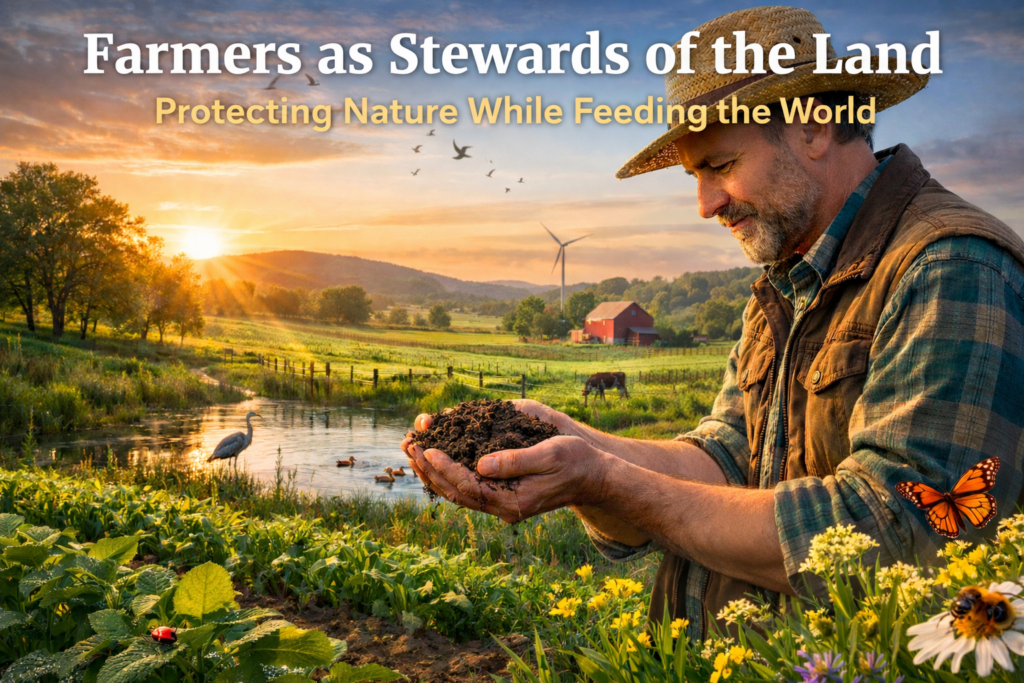
Farmers as Stewards of the Land: Protecting Nature While Feeding the World
Many farmers use conservation practices that reduce environmental damage while maintaining or even improving crop yields. Common techniques include:
-
No-till or reduced-till farming, which minimizes soil disturbance and prevents erosion
-
Cover cropping, where plants are grown between main crops to protect and enrich the soil
-
Crop rotation, which improves soil structure and breaks pest and disease cycles
-
Protecting water bodies, such as fencing streams to prevent livestock pollution
These methods help retain moisture, improve soil health, and reduce runoff of sediments and chemicals into rivers and lakes.
Preserving Land and Biodiversity
Some areas of farmland are intentionally left out of production to allow nature to recover. Leaving land fallow, maintaining field borders, planting native trees and grasses, or preserving hedgerows provides habitats for birds, insects, and other wildlife.
These practices increase biodiversity, support pollinators, and strengthen natural pest control—benefits that ultimately help farming systems become more stable and productive.
Responsible Use of Chemicals and Inputs
Modern agriculture often depends on fertilizers and pesticides, but responsible farmers focus on precision and moderation. Applying only what is needed, exactly where and when it is required, reduces waste and limits environmental harm.
Careful input management protects water sources, supports beneficial soil organisms, and reduces risks to pollinators and surrounding ecosystems, while still ensuring healthy crop growth.
Benefits for Farmers and Society
Good land stewardship creates a balance between economic success and environmental responsibility. Healthier soils lead to more reliable yields, lower long-term costs, and stronger protection of farm investments. At the same time, society benefits from cleaner water, richer biodiversity, and a more resilient food system.
By acting as stewards of the land, farmers play a crucial role in securing sustainable food production and environmental health for future generations.
Conclusion
Farmers are not just food producers—they are caretakers of the earth. Through conservation practices, biodiversity protection, and responsible resource use, they ensure that agriculture remains productive, profitable, and environmentally sound. Supporting and encouraging sustainable farming is essential for a healthier planet and a secure food future.