Why Farm Operations Visibility Is the New Superpower for Large Farms
Why Farm Operations Visibility Is the New Superpower for Large Farms
In today’s modern agriculture landscape, farms are no longer small, simple units. Large-scale farming operations involve multiple fields, machines, workers, and timelines running simultaneously. As complexity increases, relying on guesswork or scattered records becomes a serious risk. This is where farm operations visibility emerges as a true game-changer.
Farmers and agribusiness managers who adopt real-time visibility tools can make faster, smarter, and more profitable decisions. In fact, visibility is quickly becoming the new superpower for large farms.
The Hidden Cost of Poor Visibility
Many large farms still operate using traditional methods like notebooks, phone calls, and manual reporting. While these methods may seem manageable at first, they often lead to confusion and costly mistakes.
During peak seasons, activities such as planting, irrigation, spraying, fertilizing, and harvesting happen across multiple locations at once. Without a centralized system, tracking these operations becomes difficult.
As a result, several problems arise:
- Lack of proper records: Tasks are communicated verbally, leaving no reliable history of what was completed in each field
- Input mismanagement: Seeds, fertilizers, and pesticides are not accurately compared with planned usage
- Delayed cost tracking: Expenses are recorded late, making it hard to control budgets in real time
- Time wastage: Managers spend hours calling workers or checking logs just to understand field status
These inefficiencies not only increase operational costs but also reduce productivity and profitability.
How Real-Time Visibility Transforms Farm Management
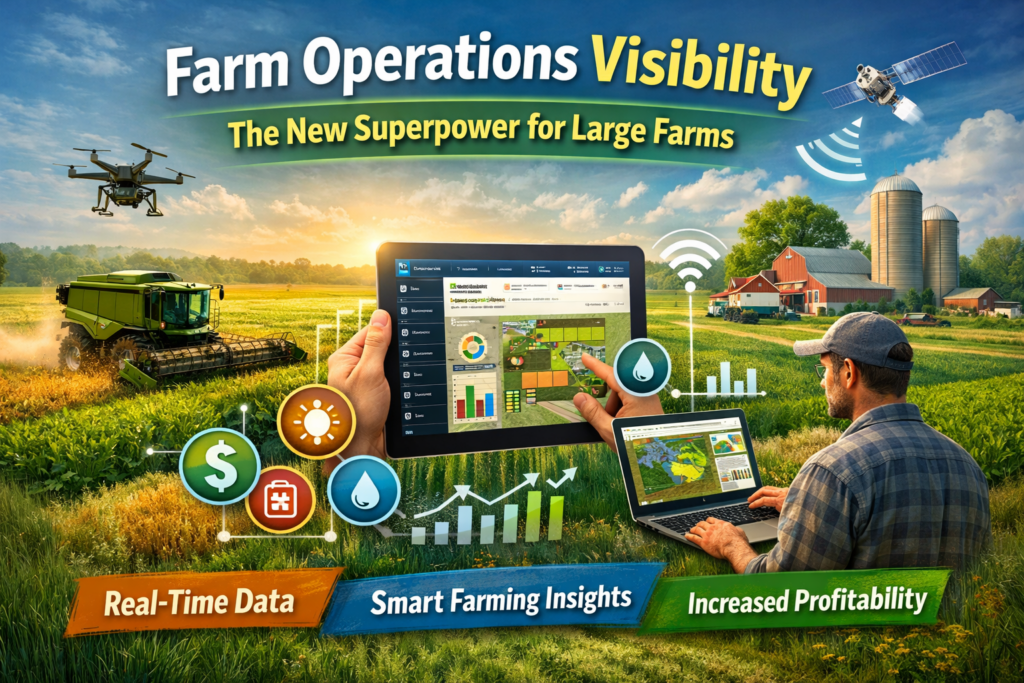
Real-time farm visibility allows all field data to be captured and accessed instantly in one system. This shift enables farmers to move from reactive decision-making to proactive management.
With a digital farm management system, every activity is tracked as it happens. Managers can monitor progress, input usage, and expenses per field or per hectare during the season itself.
Key benefits include:
1. Better Task Management
Digital work orders ensure that every activity is clearly assigned and tracked. Workers know exactly what to do, where to do it, and when it needs to be completed.
2. Faster Agronomic Decisions
Field scouting data—such as pest attacks, diseases, or crop stress—is recorded in real time. This helps agronomists take immediate action and prevent yield losses.
3. Accurate Cost Control
When financial and field data are connected, managers get a clear picture of spending. This helps avoid budget overruns and improves profit margins.
4. Improved Team Coordination
All teams—field workers, agronomists, and finance departments—work with the same data, reducing miscommunication and errors.
AGRIVI FMS 360: A Smart Farming Solution
One powerful example of farm visibility technology is AGRIVI FMS 360, a comprehensive farm management software designed for modern agriculture.
This platform integrates all critical farm operations into a single system, including:
- Crop planning
- Field activities tracking
- Input management
- Cost analysis
- Scouting and monitoring
By digitizing every process, AGRIVI ensures that each activity leaves a traceable record. This allows farm managers to analyze performance, identify inefficiencies, and optimize operations continuously.
Conclusion: From Guesswork to Data-Driven Farming
In a competitive agricultural market, success depends on precision, efficiency, and timely decisions. Large farms can no longer afford to operate without clear visibility.
By adopting real-time farm management systems like AGRIVI FMS 360, farmers can:
- Reduce risks
- Improve productivity
- Control costs
- Increase profitability
Farm operations visibility is not just a technological upgrade—it is a strategic advantage. The farms that embrace it today will lead the future of sustainable and profitable agriculture.