
Apple Picking Guide: Best Harvest Time, Techniques & Storage Tips
Apple Picking Guide: Best Harvest Time, Techniques & Storage Tips
Introduction
Apple picking is one of the most important stages in orchard management. The timing and method used during harvest directly affect fruit quality, shelf life, and the overall profitability of apple farming. Careful harvesting ensures that apples reach consumers in excellent condition while also protecting the trees for future harvests.
When to Harvest Apples
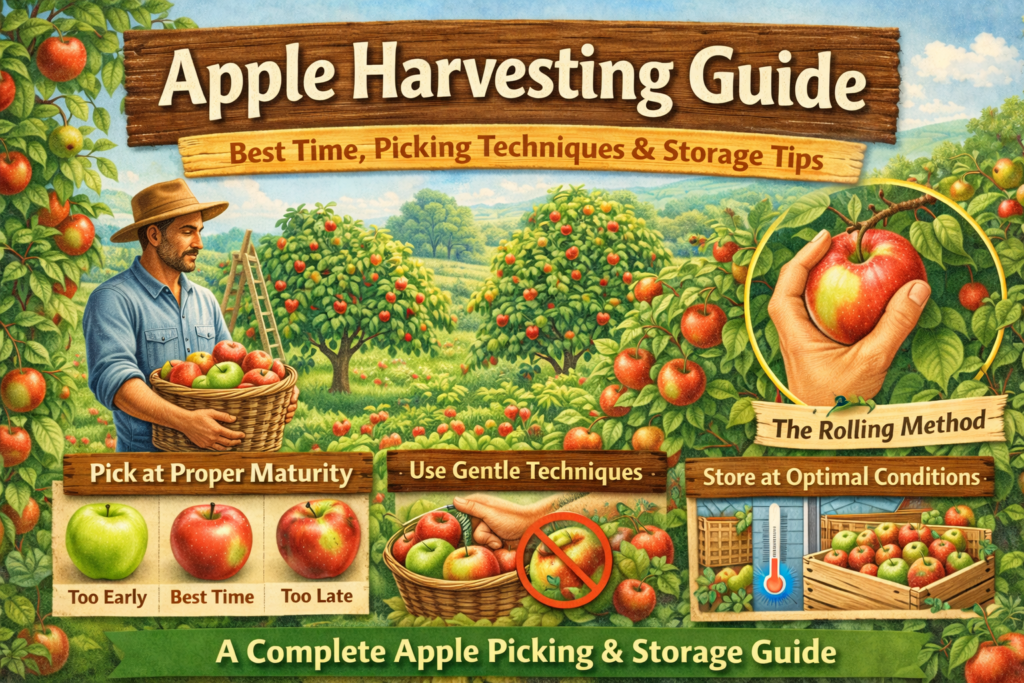
The correct harvest time should be determined by fruit maturity indicators rather than fixed calendar dates. Weather conditions, especially temperature and rainfall during the growing season, can speed up or slow down the ripening process.
Apples are generally ready for harvest when they show the following characteristics:
-
Firm and crisp texture
-
Good juice content
-
Proper color development
-
Full varietal flavor
Harvesting too early may result in:
-
Poor taste and texture
-
Lower market value
-
Reduced storage life
-
Higher risk of storage disorders
On the other hand, harvesting too late can cause:
-
Soft fruit
-
Loss of acidity
-
Fruit drop from trees
-
Higher damage during transport and packing
Correct Apple Picking Technique
Using the proper harvesting technique helps prevent damage to both the fruit and the tree.
The most recommended technique is the “rolling method.”
Steps for proper picking:
-
Hold the apple gently in your hand.
-
Lift the fruit slightly upward.
-
Twist it gently so it rolls off the branch spur.
-
The apple should detach easily if it is ripe.
Important tips:
-
Do not pull the fruit forcefully.
-
Avoid breaking the spur because it produces fruit next season.
-
Place apples carefully in picking bags or baskets.
-
Never drop fruit into containers to avoid bruising.
Gentle handling is essential because even small internal bruises can reduce fruit quality during storage.
Impact on Storage and Fruit Quality
Harvest timing strongly affects how well apples store and how they perform in the market.
Apples harvested at the correct maturity stage maintain:
-
Better firmness
-
Stronger flavor
-
Longer storage life
-
Improved appearance
Incorrect harvesting can lead to problems such as:
-
Shriveling in storage
-
Internal breakdown
-
Reduced shelf life
-
Damage during packing and transportation
Because many apple growers store fruit for several months in cold storage, selecting the right harvest stage becomes a key economic factor.
Importance of Good Orchard Management
Apple harvesting works best when it is part of a well-organized orchard management system.
Farmers should maintain records such as:
-
Flowering dates
-
Weather conditions
-
Fertilizer and spray schedules
-
Harvest dates
-
Storage performance
Modern digital farm management tools can help growers track orchard activities and make better decisions based on data. These systems improve planning, reduce losses, and increase long-term profitability.
Conclusion
Apple picking is not just about harvesting fruit; it is a critical step that determines fruit quality, storage life, and market value. By choosing the correct harvest time, using proper picking techniques, and maintaining good orchard management practices, farmers can produce high-quality apples and achieve better returns from their orchards.