Pollinators: The Hidden Workforce Behind Global Food Production
Pollinators: The Hidden Workforce Behind Global Food Production
Pollinators are silent but powerful partners in modern agriculture. By transferring pollen between flowers, they enable plants to form fruits and seeds, directly influencing crop yield, quality, and farm profitability. A significant share of the world’s food supply relies on this natural process, making pollinators essential not only for farmers, but also for global food security.
Why Pollinators Matter
Pollination is carried out by a diverse group of animals, including bees, butterflies, wasps, birds, bats, and other insects. Among these, bees play the most critical role. Interestingly, many wild pollinators—such as bumblebees and solitary bees—can be more efficient than managed honeybees when measured on an individual basis.
Different crops depend on different pollinators. For example:
-
Beans benefit greatly from bumblebee activity
-
Apples and strawberries rely on a wide range of insects
-
Oilseed crops require consistent insect visitation for optimal output
This diversity ensures stable production across farming systems.
Impact on Crop Yield and Produce Quality
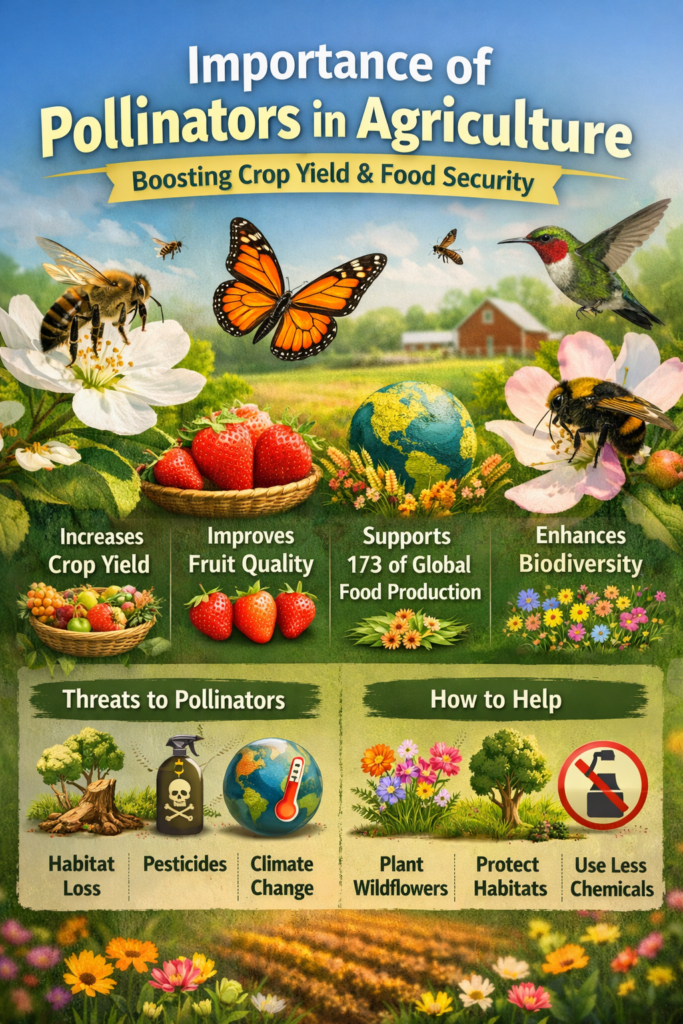
Animal-assisted pollination supports roughly one-third of global food production. Well-pollinated crops typically show:
-
Larger and more uniform fruits
-
Better seed development
-
Higher oil content in oilseeds
-
Improved shelf life and appearance
In fruits like strawberries, effective pollination improves shape, nutritional value, and market appeal. When pollinator numbers decline, yields become lower and more unpredictable—especially under climate stress and changing land-use patterns.
Growing Threats to Pollinators
Despite their value, pollinator populations are declining worldwide. Key reasons include:
-
Loss of natural habitats
-
Expansion of monoculture farming
-
Excessive use of pesticides and agrochemicals
-
Spread of pests and diseases
-
Climate-driven mismatches between flowering and pollinator activity
Uniform landscapes and reduced floral diversity deprive pollinators of nesting sites and year-round food sources, weakening entire ecosystems.
Practical Farm Practices to Protect Pollinators
Farmers can actively support pollinators through simple, effective measures:
-
Creating flower-rich field borders and buffer strips
-
Preserving hedgerows and reducing frequent cutting
-
Protecting nearby grasslands, wetlands, and wooded areas
-
Using pesticides carefully and avoiding spraying during flowering
-
Promoting crop diversity and longer rotations
Leaving patches of uncultivated land and maintaining low-input grasslands provide safe nesting and overwintering habitats for wild pollinators.
Managed Pollinators in Modern Farming
In some intensive systems, managed pollinators are used to supplement natural populations. High-value crops like almonds often require large numbers of honeybee colonies during flowering to meet pollination demand.
While managed bees can help fill short-term gaps, they should not replace wild pollinators. A balanced approach—combining managed services with strong habitat conservation—creates a more resilient and sustainable pollination system for the future.
Conclusion
Pollinators are a cornerstone of productive and resilient agriculture. Protecting them is not only an environmental responsibility, but also a smart economic decision for farmers and food systems worldwide. Supporting pollinators today ensures stable harvests, better-quality food, and long-term agricultural sustainability.